Neue Usbekistan-Universität
1,620
Studierende
0
Internationale Studierende
75
Lehrpersonal
41
Fakultäten
13
Lehrstühle
2021
Gegründet
Videos und Fotos
Über die Universität
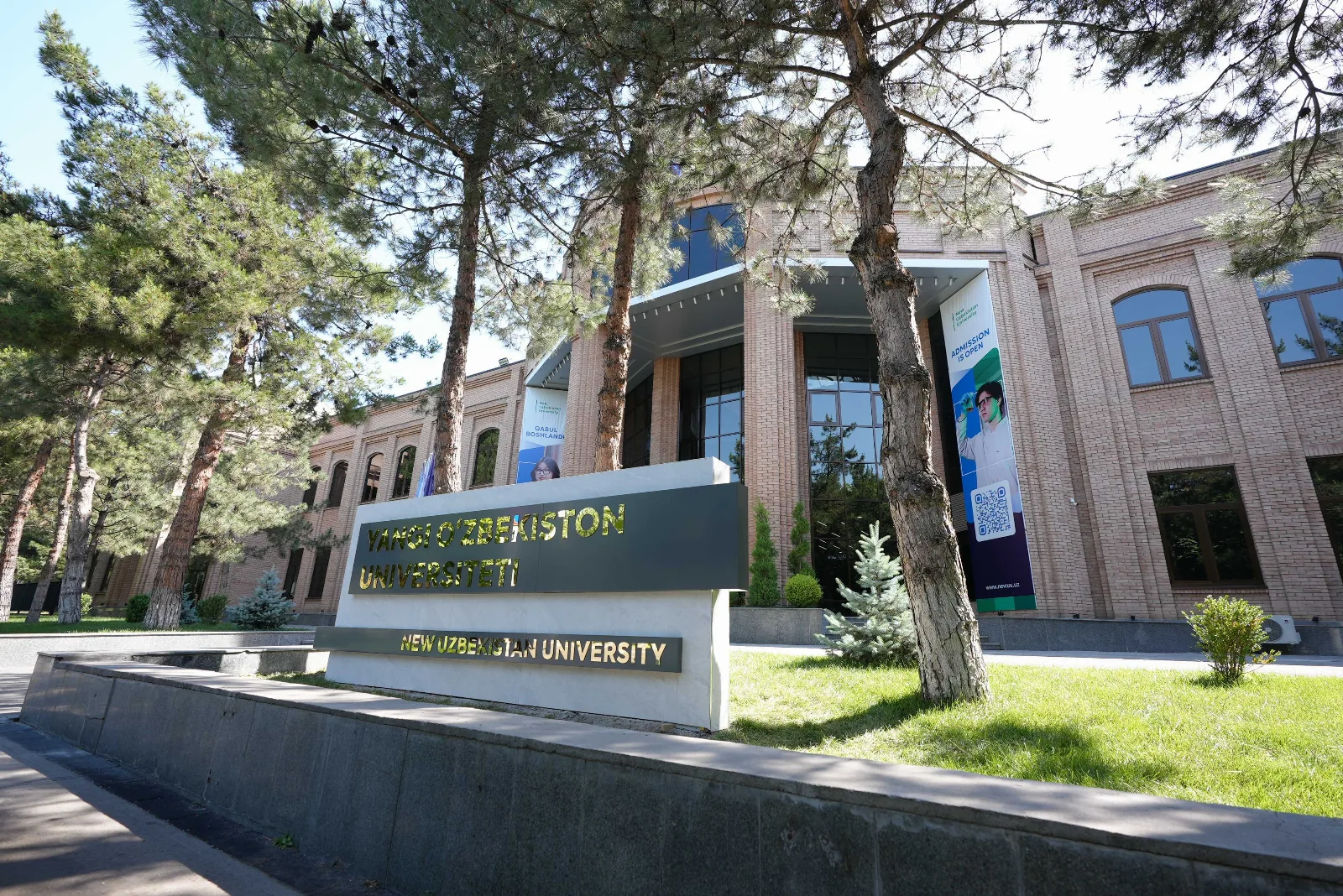
Die Uzbekistan University (NewUU) ist die erste umfassende Forschungsuniversität Usbekistans, die Bildung nahtlos mit Spitzenforschung verbindet. Die in Zentralasien gelegene NewUU prägt die akademische Landschaft des Landes durch Partnerschaften wie das Jameel Abdul Latif World Education Lab (J-WEL) des MIT und die Technische Universität München (TUM) International. Mit vielfältigen Studiengängen in den Bereichen Ingenieurwesen, Informatik, Geisteswissenschaften und Management rüstet NewUU zukünftige Führungskräfte und Innovatoren mit den nötigen Fähigkeiten aus, um den Fortschritt voranzutreiben. Als Innovationszentrum fördert sie den Wissensaustausch durch Veranstaltungen wie Foren, Konferenzen und Hackathons und trägt so zur Entwicklung Usbekistans und Zentralasiens bei.
Für internationale Studierende
Die New Uzbekistan University (NewUU) heißt alle internationalen Studierenden herzlich willkommen und unterstützt sie während ihres gesamten Studiums umfassend. Ab dem Zeitpunkt der Einschreibung erhalten die Studierenden volle Unterstützung bei der Unterkunft, der Visa-Unterstützung und weiteren zusätzlichen Dienstleistungen. Wir bemühen uns, dass sich jeder Studierende willkommen und wie zu Hause fühlt – sowohl auf unserem Campus als auch in ganz Usbekistan.
Internationale Partnerschaften
Die New Uzbekistan University unterhält ein umfangreiches Netzwerk internationaler Kooperationen mit 45 Universitäten weltweit. Diese Partnerschaften sind durch mehr als 50 Kooperationsvereinbarungen formalisiert und ermöglichen es unseren Studierenden, an 10 verschiedenen Studierendenaustauschprogrammen und Summer Schools teilzunehmen, die von unseren internationalen Partnern organisiert werden. Zu unserem Netzwerk gehören mehrere weltweit und regional hoch eingestufte Institutionen, darunter die Peking University (China), die Technische Universität München (Deutschland), die University of Bologna (Italien), die Nazarbayev University (Kasachstan), die Khalifa University (VAE) und die University of Reading (Vereinigtes Königreich), neben vielen weiteren.
Sprachkurse
Alle Studienprogramme der Universität werden auf Englisch unterrichtet. Daher müssen die Studierenden bei der Bewerbung einen Nachweis über ihre Englischkenntnisse vorlegen.
Möglichkeiten für Studierende
{}
Fakultäten
Agrotechnology prepares graduates to contribute effectively to the agricultural economy and advancements in agricultural technology. The aim of this flagship programme is to equip students with essential theoretical knowledge and practical skills in agricultural technology, innovation. The curriculum offers hands-on training opportunities and practical skills for building sustainable, smart, and resilient agriculture.
The Executive MBA program at New Uzbekistan University, offered by the School of Management, Department of Industrial Management, is a modular, practice-oriented graduate program designed for experienced professionals, senior managers, and executives seeking to strengthen their leadership, strategic, and decision-making capabilities in a global context.
The program integrates advanced management theory with real-world business practice, focusing on leadership, strategy, finance, digital transformation, sustainability, and governance. Delivered through an executive-friendly format, the program combines on-campus modules, residential periods, and applied learning, enabling participants to balance academic rigor with professional responsibilities.
The Executive MBA emphasizes experiential learning through case studies, simulations, executive challenges, and peer learning. International residential modules and exposure to global business environments further enhance participants’ strategic perspectives and cross-cultural competencies. Graduates are prepared to lead organizations, drive transformation, and contribute to sustainable value creation in both private and public sectors.
The six-year Medicine programme, a bachelor-level programme at New Uzbekistan University, provides comprehensive, scientifically grounded medical training in accordance with internationally recognised educational principles based on German standards. The programme is conducted entirely in English and combines foundational medical sciences with early clinical practice, modern teaching methods, and competency-based learning.
Graduates acquire in-depth knowledge of medical theory, clinical skills, and professional and ethical competencies that prepare them for careers in medicine, further medical training, or international career opportunities.
International Academic Partnerships
The Medicine programme at New Uzbekistan University is being developed in partnership with leading German university hospitals and medical institutions. These collaborations provide academic guidance, institutional models, and international expertise in medical education, clinical training, research, and healthcare innovation.
The programme is supported by cooperation with:
- University Medical Center Freiburg
- Heidelberg University Hospital
- University Hospital Frankfurt
- Technical University of Munich School of Medicine
University Medical Center Freiburg – Integrated University Medicine Model
University Medical Center Freiburg serves as the principal institutional reference model for the project. Freiburg represents one of Germany’s leading university medical centres and demonstrates how an integrated university hospital system combines clinical care, medical education, and scientific research within a unified institutional structure.
Its interdisciplinary centres in oncology, cardiology, neurosciences, transplantation medicine, intensive care, and emergency medicine function simultaneously as treatment units, educational platforms, and research environments.
The partnership contributes expertise in:
- integrated university hospital structures;
- centre-based clinical management models;
- quality management and patient safety systems;
- integration of skills laboratories, simulation centres, and research units into clinical training.
These principles support the development of a modern university clinic in Uzbekistan designed according to internationally recognised standards.
Heidelberg University Hospital – Translational Medicine and Oncology
Heidelberg University Hospital contributes expertise in biomedical research, translational medicine, and comprehensive oncology care. Heidelberg is internationally recognised for its advanced cancer centre, strong clinical research infrastructure, and integration of molecular diagnostics and personalised medicine into everyday clinical practice.
The partnership supports the programme through:
- models for comprehensive oncology care;
- translational research structures linking scientific discoveries with clinical treatment;
- clinical trial governance and research ethics;
- integration of molecular diagnostics and precision medicine into clinical decision-making.
These elements contribute to the long-term development of research-oriented medical education and advanced clinical services in Uzbekistan.
University Hospital Frankfurt – Competency-Based Medical Education
University Hospital Frankfurt provides expertise in competency-based medical education, clinical skills training, and modern assessment systems.
Frankfurt is recognised for:
- structured undergraduate and residency training programmes;
- advanced skills laboratories and simulation centres;
- objective clinical assessment systems;
- innovative clinical teaching methodologies;
- faculty development and pedagogical innovation.
The collaboration supports the implementation of practice-oriented medical education with early clinical exposure and structured clinical training aligned with German medical education standards.
Technical University of Munich – Digital Medicine and Innovation
Technical University of Munich School of Medicine contributes expertise in digital medicine, medical technologies, and healthcare innovation.
The partnership focuses on:
- digitally integrated hospital systems;
- data-driven quality and outcomes monitoring;
- integration of advanced diagnostic technologies;
- artificial intelligence and digital healthcare solutions;
- innovation and technology transfer models.
These principles support the creation of a future-oriented academic medical environment capable of adapting to technological advances and evolving healthcare needs.
Students have a set of core courses on the English Language, Critical Thinking Skills, Mathematics, Digital Information, and Humanities along with other courses that will provide heavy and stable pillars of knowledge, for each of their areas of expertise. Courses on Economics, Management, Programming, and Physics will be needed, depending on each individual student's Degree plan.
It is our strong belief that with hard work and devoted commitment from students with a strong Foundation background, success in studies and a future professional environment is at a near distance.
Thus, we are proud to receive all the new students with a promise of full dedication and attention to them, from our very diverse and highly qualified faculty members.
The industrial management major focuses on understanding project and quality management, mathematical modelling, supply chain management, operations planning and scheduling, service operations, and operations strategy. As industrial management student, a student may end up in a variety of industries (supply chains, manufacturing, services, consulting, etc.)
A student will then apply this theory to practical problems, while practicing essential aspects of professional career including design, communication and project management. By the end of your senior year, you’ll not only have superior knowledge but the industrial field, but also an ability to understand and work in management for any manufacturing firm or group.
The M.Sc. program in Sustainable Chemical Engineering and Materials is designed to equip students with the expertise needed to address modern challenges in sustainable engineering. From advanced materials development to proficiency in chemical process modeling and sustainability-driven innovations, graduates gain the skills to design and optimize eco-friendly engineering solutions. Students also explore renewable energy technologies, circular economy principles, and cutting-edge materials science while developing strong problem-solving, critical thinking, and research capabilities. Emphasizing interdisciplinary collaboration and ethical responsibility, the program prepares students for careers in academia or industry, including sustainable manufacturing, green chemistry, and advanced materials engineering.
Our Computational Physics program provides students with the skills needed for contemporary quantum challenges. From quantum algorithm development to proficiency in mathematical modeling and quantum simulations, graduates gain expertise in solving complex quantum problems. Students also learn about quantum hardware architectures, problem-solving, critical thinking, and research proficiency. Emphasizing interdisciplinary collaboration and ethical conduct, students are prepared for academic or industry careers in quantum computing, computational physics, subatomic physics, and other related interdisciplinary fields with a commitment to adaptability and lifelong learning. Additionally, graduate assistantships are available.
B.Sc. Software Engineering
Our department offers knowledge of computation, information, and automation via theoretical disciplines and applied disciplines. For the theoretical disciplines, it includes algorithms, theory of computation, and information theory. Whereas applied disciplines, including the design and implementation of hardware and software. Each discipline is extended to the way of programming, cryptography, and security. For more detail, programming language theory provides different ways to describe the computation process, and the database concerns the management of data. Operating systems, networks, and embedded systems explore the principle and design of complex systems, computer architecture describes the construction of computer components and equipment. Based on computer structure and algorithm development, artificial intelligence and machine learning have become the main part of computer science nowadays. It is applied to computer vision, and natural language to understand and process textual and linguistic data.
The Double Degree Master of Science in Computational Data Science (M.Sc. CODS) is a flagship graduate program jointly delivered by Khalifa University (UAE) and New Uzbekistan University (Uzbekistan). Designed at the intersection of advanced computing, applied mathematics, and real-world problem solving, the program prepares highly skilled data scientists ready to lead in industry, government, research institutions, and doctoral programs worldwide. Graduates earn two internationally recognized diplomas — one from Khalifa University and one from New Uzbekistan University.
Program Vision
The MSc in Computational Data Science is built to educate the next generation of data scientists who can:
● Design scalable algorithms
● Extract actionable insight from large-scale data
● Build AI-powered systems
● Lead digital transformation initiatives
● Conduct high-level research in computational sciences
Program Educational Objectives
The MSc CODS program aims to produce graduates who:
● Advance professionally and become recognized experts in computational data science.
● Apply advanced technical expertise to solve critical societal and industrial challenges.
● Demonstrate ethical leadership in data-driven decision-making.
● Pursue doctoral education or high-level professional specialization when desired.
Student Learning Outcomes
Upon graduation, students will be able to:
● Formulate and solve advanced computational data science problems.
● Apply mathematical modeling and statistical inference rigorously.
● Design and implement scalable machine learning systems.
● Critically evaluate emerging AI and data technologies.
● Conduct independent research and defend findings in a formal examination.
● Work effectively in multidisciplinary teams.
● Uphold professional and ethical standards in data practice.
Concentration Tracks
Computational Systems Concentration
● Advanced design and analysis of computational infrastructures for data-intensive applications.
Data Analytics Concentration
● Advanced modeling and application of statistical and machine learning methods across industries.
B.Sc. Cyber Security
Our department aims to help students to be well-prepared for early success in the public/private sector, and in higher education. The department offers both a bachelor's degree in Cyber Security to prepare students for productive careers such as leadership roles in service and further study in postgraduate programs around the world. In this regard, our department provides education to students to meet the requirements to detect, identify, assess, mitigate, respond, and recover from cyber threats and improve their cyber security posture. Our graduates will have the related knowledge and demonstrate strong analytical, design, and implementation skills which are related to solving complex cyber security problems in a professional or research environment. Additionally, our department emphasizes effective communication, collaboration, and continuous learning as ethically and socially responsible cyber security professionals.
B.Sc. AI & Robotics
Our department offers knowledge of intelligent systems, information processing with neural networks, and mass data analyzing via theoretical disciplines and applied disciplines. For the theoretical disciplines, it includes neural network structure and related algorithms, pattern recognitions, computer vision, and information theory. Whereas applied disciplines, including the design and implementation with software/hardware. Each discipline is extended to the way of programming, and hardware implementation. Based on developed AI algorithms and its applications, artificial intelligence and machine learning have become the main part of computer science, engineering, and social science as well. The AI area will become the frontier to promote human life and industry together.
Our Department of Mechanical Engineering is dedicated to cultivating the next generation of innovative thinkers and problem-solvers, poised to make meaningful contributions across a spectrum of industries. With a curriculum grounded in theory and hands-on experiences, we empower students to explore their passions and pursue diverse career paths in mechanical engineering.
Our department opens the door to many opportunities for our students:
-
- - In the automotive industry, our mechanical engineers will design, manufacture, and optimize vehicles and transportation systems
-
- - The aerospace industry presents exciting prospects for mechanical engineering students. Whether designing next-generation aircraft, propulsion systems, or spacecraft, students can immerse themselves in projects that advance the frontiers of aerospace engineering and contribute to groundbreaking discoveries.
-
- - In the field of renewable energy, our graduates can apply their expertise to develop sustainable solutions for harnessing wind, solar, and hydroelectric power.
-
- - With the rapid advancement of technology, emerging fields such as robotics, additive manufacturing, and biomedical engineering offer exciting avenues for exploration and innovation. Whether designing medical devices, developing robotic systems, or pioneering new materials for healthcare applications, students will make a tangible impact on society while pursuing their passions.
Together, education and research form the backbone of our department, which inspires the next generation of leaders and innovators.
The M.Sc. program in Artificial Intelligence and Machine Learning at New Uzbekistan University is an intensive one-year program designed to provide students with a strong theoretical foundation and practical expertise in AI-driven technologies. The program offers a rigorous curriculum covering algorithmic principles, artificial intelligence methodologies, and advanced machine learning techniques, equipping graduates with the skills required for both industry and research.
Students will complete five graduate-level courses: Algorithm Design Techniques, Artificial Intelligence, Machine Learning, Deep Learning, and Theoretical Foundations of Machine Learning. These courses provide a comprehensive understanding of the theoretical and applied aspects of AI and ML, ensuring that students gain both depth and breadth in the field. Alongside their coursework, students will undertake a Master Project, where they will apply their knowledge to solve real-world AI challenges. Additionally, a research seminar course will help them develop critical analysis, research, and presentation skills, preparing them for academic and professional excellence.
This accelerated program is ideal for professionals seeking to advance their expertise in AI and ML, as well as for graduates aspiring to pursue research in artificial intelligence. By integrating fundamental concepts with cutting-edge developments, the program prepares students for leadership roles in AI-driven industries, research institutions, and technological innovation.
M.Sc. in Economics and Data Science program is an interdisciplinary graduate degree designed to equip students with advanced knowledge of economic theory and cutting-edge data science techniques. The program emphasizes integrating quantitative methods, programming skills, and analytical tools to address real-world economic and policy challenges. Graduates will be prepared for careers in academia, industry, or government, where they can leverage data-driven insights to inform decision-making and innovate in the digital economy.
As a flagship initiative of our university, this master’s program will serve as the cornerstone for establishing the Central Asia School of Economics (CASE), further solidifying our commitment to advancing economic research and policy analysis in Uzbekistan. CASE will be based on three pillars: MEDS, GEAR (The Greater Eurasia Research Center), and YESU (Young Economists Society of Uzbekistan) and we envision an emergence of vibrant and community of young economists, who will make a decisive contribution to the nation’s economic growth and prosperity.
Founding Dean Professor Shlomo Weber Welcome Remarks
Dear Future Graduate Students,
It is my pleasure to welcome you as you begin an exciting academic journey by enrolling in the Master’s program in Economics and Data Science and joining a community dedicated to academic excellence and innovation.
This program offers a curriculum designed to equip you with the skills and knowledge necessary to navigate the complexities of today’s economic landscape. Our commitment to high standards ensures that you will receive a strong theoretical foundation while engaging in practical work that reflects the latest developments in the field.
You will have the opportunity to learn from some of the world’s leading professors, whose expertise spans a wide range of topics in economics and data analysis. They are not only accomplished scholars but also passionate educators dedicated to fostering an environment of intellectual curiosity and collaboration.
The program will help you develop critical analytical skills and gain hands-on experience in advanced data analysis and modeling. Whether you choose to pursue an academic career and continue toward PhD studies, or work in industry or government, you will be well prepared to address real-world challenges and make meaningful contributions to public policy, academia, and industry.
I encourage you to fully embrace this opportunity, engage with your peers, and take advantage of the resources available to you. The professional network you build and the knowledge you gain here will serve as a strong foundation for your future endeavors. If you work hard, your efforts will be rewarded many times over.
Who Can Benefit from the Economics and Data Science Master Program?
This program is ideally suited for ambitious individuals looking to excel in economics and data science. It is an excellent fit for those:
- Aspiring to Advanced Careers: Professionals wishing to pursue a high-level career that requires an advanced degree in economics.
- Targeting Top Ph.D. Programs: Students seeking rigorous preparation to gain entry into top-ranked Ph.D. programs in economics.
- From STEM and Technical Backgrounds: Graduates with undergraduate training in STEM fields, including IT, mathematics, engineering, accounting, finance and physics, who want to leverage their analytical skills in economics.
Program Highlights:
The Economics and Data Science Master Program offers a transformative educational experience:
- Expert Faculty and Network: The program is led by senior faculty with extensive professional and academic networks, providing unparalleled mentorship.
- Rigorous, Dual-Focus Training: Students receive comprehensive, rigorous training in both data science and economics, preparing them for a wide range of future economics-related careers, both academic and professional.
- Global Opportunities: Numerous study abroad opportunities are available.
The Department of Chemical and Materials Engineering focuses on applied research and practice-oriented education to address real-world challenges in energy, sustainability, health, and advanced technologies. The program integrates chemical engineering fundamentals with materials science and nanotechnology, emphasizing the translation of scientific principles into practical solutions. Students engage in hands-on laboratory work, industry-linked projects, internships, and research-driven design courses, developing strong analytical, experimental, and problem-solving skills. Graduates are prepared to contribute immediately to applied research and innovation in sectors such as automotive, aerospace, energy systems, nanotechnology, pharmaceuticals, biotechnology, and advanced manufacturing, as well as to pursue graduate studies and research careers.
The Master of Arts in Applied Linguistics and TESOL at New Uzbekistan University is a comprehensive graduate program designed to equip students with advanced knowledge and practical skills in the fields of linguistics and Teaching English to Speakers of Other Languages (TESOL). This program is tailored to meet the growing demand for qualified language educators and researchers in Uzbekistan and the broader Central Asian region. Upon successful completion of the program, students will be awarded a Master’s degree in Applied Linguistics and TESOL from New Uzbekistan University.
Program highlights
- Interdisciplinary Curriculum: The program offers a blend of theoretical and practical courses, including language acquisition, curriculum design, and language assessment. This interdisciplinary approach ensures that graduates are well-prepared to address complex linguistic and educational challenges.
- Research Opportunities: Students engage in independent research projects, fostering critical thinking and analytical skills. The university provides access to state-of-the-art research facilities and resources to support scholarly endeavors.
- Practical Experience: The program includes a practicum component, allowing students to gain hands-on teaching experience in diverse educational settings. This practical training is essential for developing effective teaching strategies and classroom management skills.
- Global Perspective: Emphasizing the importance of cultural awareness in language teaching, the program prepares graduates to work in multicultural environments and adapt to the needs of diverse learner populations.
The MA in Applied Linguistics and TESOL is structured to provide a solid foundation in both the theoretical and practical aspects of language education. The curriculum encompasses core areas such as:
- Applied Linguistics: Exploring the relationship between language theory and practical application in teaching.
- Second Language Acquisition: Understanding how individuals learn additional languages and the factors that influence this process.
- TESOL Methodologies: Examining effective teaching methods and strategies for English language learners.
- Curriculum and Material Development: Designing and evaluating educational programs and resources tailored to diverse learning needs.
- Language Assessment: Developing skills in evaluating language proficiency and educational outcomes.
The program also emphasizes the development of research skills, enabling students to conduct independent studies that contribute to the field of language education. Through a combination of coursework, practical teaching experience, and research projects, graduates are prepared to become effective educators and leaders in the field of TESOL.
Our Department of Mechanical Engineering is excited to launch the B.Sc. Aerospace Engineering program for students who are curious about how things fly—and how we can push flight further, safer, and more sustainably. Built on strong engineering fundamentals and lots of practical, hands-on learning, the program helps students turn ideas into real designs, test them, improve them, and understand what it takes to build systems that must perform reliably in demanding conditions.
This program can lead to many exciting directions:
- Aviation: work on aircraft and aircraft systems—designing, testing, and improving performance, safety, and efficiency, from traditional airplanes to next-generation air mobility.
- Space and satellites: contribute to spacecraft and satellite technologies and the systems that support missions in communication, navigation, Earth observation, and exploration.
- Propulsion and high-performance systems: focus on engines and energy systems—from turbines to rocket propulsion—while learning how to optimize performance and reduce emissions.
- Emerging technologies: explore drones and autonomous flight, lightweight materials and composites, digital design and simulation, additive manufacturing, and other tools that are transforming the aerospace field.
- Education and research are at the heart of our department. We want students to feel supported, challenged, and inspired—so they graduate with the skills and confidence to take on real aerospace problems and make a meaningful impact.
M.Sc. in Financial Mathematics
The M.Sc. Program in Financial Mathematics at New Uzbekistan University is an intensive one-year program designed to provide students with a strong theoretical foundation and practical expertise in the development and analysis of mathematical models for solving complex problems in the financial sector. The program offers a rigorous curriculum covering Stochastic Analysis, financial market modeling, risk management, and advanced data analysis, equipping graduates with the skills required for both industry and research.
This accelerated program is ideal for professionals seeking to advance their expertise in quantitative finance and numerical implementation, as well as for graduates aspiring to pursue research in applied mathematics, stochastic processes, or financial engineering. By integrating fundamental concepts with cutting-edge developments, the program prepares students for leadership roles in industries, research institutions, and technological innovation.
The Mathematics department thrives as a vibrant community comprising scholars, educators, and learners. Its tenured and tenure-track faculty members embody a diverse range of mathematical research domains. Collaboratively, the faculty, along with lecturers and graduate instructors, deliver a comprehensive selection of courses designed for students across various levels of mathematical proficiency
Master of Science (Double Degree)
Lead teams to success and manage with efficiency with the M.Sc. in Industrial Management, a double-degree program from New Uzbekistan University (Uzbekistan) and Hochschule Mittweida - University of Applied Sciences (Germany).
Course Description
M.Sc. in Industrial Management is a two-year double-degree program offered by New Uzbekistan University in Uzbekistan and Hochschule Mittweida - University of Applied Sciences in Germany. This program focuses on the essentials of managing industrial operations and managing enterprises effectively.
This program is designed to provide a deep dive into industrial management across two countries. The journey begins at New Uzbekistan University for the first semester, moving to Hochschule Mittweida - University of Applied Sciences for the second semester. For the third semester, students have the option to continue studies in either location, taking advantage of the unique strengths of each institution. The final semester is dedicated to the Master's Thesis.
In addition, students will benefit from the robust industrial landscape of Saxony, home to Hochschule Mittweida. The region is known for its dynamic industry ecosystem, including advanced manufacturing, automotive, and IT. This proximity to leading-edge industrial operations offers students a unique opportunity for learning and engagement with modern industrial practices. The experience in Saxony enriches the academic journey, equipping students with practical insights and preparing them for leadership roles in the global industrial landscape.
Overall, the program's goal is to prepare graduates with backgrounds in management, science or engineering for leadership roles in global manufacturing and service sectors, by blending technical knowledge with essential business and management skills.
The Department of Economics is typically a part of a university or academic institution, focused on the study of production, distribution, and consumption of goods and services. It encompasses various fields such as microeconomics, macroeconomics, econometrics, and economic theory. These departments offer undergraduate, graduate, and sometimes doctoral programs, preparing students for careers in academia, government, business, and other sectors.
Departments of economics typically offer a range of courses covering various topics such as:
- Microeconomics: Examining individual economic agents such as consumers, firms, and markets, and analyzing their behavior and interactions.
- Macroeconomics: Studying the aggregate behavior of an economy, including topics like inflation, unemployment, economic growth, and fiscal and monetary policy.
- Econometrics: Applying statistical and mathematical techniques to analyze economic data and test economic theories.
- Economic theory: Exploring foundational concepts and models used to understand economic phenomena, such as supply and demand, utility theory, game theory, and general equilibrium theory.
- Applied economics: Investigating real-world economic issues and problems, such as environmental economics, labor economics, development economics, and international trade.
In addition to coursework, economics departments often engage in research activities, producing academic papers, reports, and policy recommendations. They may also host seminars, conferences, and workshops to foster intellectual exchange and collaboration among faculty, students, and visiting scholars. Furthermore, economics departments may have ties to research centers, institutes, or think tanks focused on specific economic issues or policy areas.
The Master of Science (M.Sc.) in Project Management at New Uzbekistan University is a one-year, thesis-based program designed to equip students with the skills and knowledge required to manage complex projects across industries. The program provides a strong foundation in strategic planning, problem-solving, project budgeting, and resource management, ensuring graduates can successfully execute projects within scope, time, and financial constraints.
The curriculum consists of 36 ECTS of core courses, 12 ECTS of electives, and a 32 ECTS thesis. Courses cover key topics such as project planning, execution, risk management, cost control, leadership, communication, and stakeholder management. Delivered in-person in a block format, the program is designed to accommodate working professionals. Students engage with quantitative techniques, case studies, and simulations, gaining practical experience in decision-making and project execution.
As a specialized degree, the M.Sc. in Project Management provides a comprehensive approach to project management concepts, making it an essential graduate program for individuals who aim to excel in project-oriented roles, such as project coordinator, assistant project manager, junior project analyst, or team lead. Graduates gain a competitive edge in the job market, developing the ability to lead teams, manage budgets, and navigate complex project environments. While a master’s degree is not a requirement for becoming a project manager, it improves career prospects, offering opportunities for leadership roles in industries that demand high-level project management expertise.
Program
Two to three years after completing the program, graduates will:
- Use project management skills to plan, budget, manage risks, and engage stakeholders across industries.
- Apply analytical, problem-solving, and communication skills to coordinate projects and lead teams effectively.
- Develop professional skills that support career growth in project management or further academic studies.
- Manage complex projects efficiently and contribute to the success of organizations and their communities.
Program outcomes (POs)
Upon successful completion of M.Sc. in Industrial Management, the graduating students will attain:
- PO1 Advanced Analytical and Problem-Solving Skills
- An ability to critically analyze complex industrial and business challenges, using data-driven and evidence-based approaches to propose effective solutions.
- P02 Comprehensive Understanding of Management Practices
- An ability to demonstrate advanced knowledge of key management domains, including operations, supply chain, leadership, and innovation management, and their integration into industrial and service contexts.
- P03 Leadership and Communication Skills
- An ability to exhibit advanced written and oral communication skills and apply collaborative leadership techniques to manage and motivate teams in diverse organizational settings.
- P04 Ethical and Responsible Decision-Making
- An ability to evaluate the ethical, legal, and societal implications of managerial and organizational decisions, with a commitment to sustainable and socially responsible practices.
- P05 Global and Strategic Perspective
- An ability to identify and evaluate global factors (economic, political, cultural, and technological) that influence industrial and organizational strategies in an interconnected world.
Graduation Requirements
The conferment of the Master of Science in Industrial Management degree is subject to the successful fulfillment of all academic, administrative, and financial requirements specified by New Uzbekistan University. The table below outlines the specific criteria that students must satisfy to be eligible for graduation:
- Completion of Academic Credits
- Fulfillment of the 70 ECTS credit requirement, comprising mandatory and elective courses as outlined in the program curriculum.
- Master’s Thesis
- Submission and successful defense of a Master’s thesis demonstrating advanced, independent research and application of knowledge in project management.
- Compliance with Policies and Regulations
- Full compliance with the academic, administrative, and ethical standards of New Uzbekistan University. Non-compliance may result in disqualification.
- Financial Obligations
- Settlement of all tuition fees, semester fees, and associated costs to New Uzbekistan University and Hochschule Mittweida, as applicable.
Fachrichtungen
| Angewandte Linguistik und TESOL 70230701 | Meisterinnen |
| Angewandte Mathematik 70530104 | Bachelor |
| Chemie- und Werkstofftechnik 60710100 | Bachelor |
| Computational Data Science 70540401 | Meisterinnen |
| Computational Physics 70530501 | Bachelor Meisterinnen |
| Cybersicherheitstechnik 60612100 | Bachelor |
| Finanzmathematik 70540201 | Meisterinnen |
| Industriemanagement 60712200 | Bachelor |
| Industriemanagement 70712201 | Meisterinnen |
| Internationale Fakultät für Medizin 60910200 | Bachelor |
| Künstliche Intelligenz und Maschinelles Lernen 70610701 | Meisterinnen |
| Künstliche Intelligenz und Robotik 60610700 | Bachelor |
| Luft- und Raumfahrttechnik 60712800 | Bachelor |
| Maschinenbau 60712300 | Bachelor |
| Nachhaltige Chemie- und Werkstofftechnik 70710101 | Meisterinnen |
| STEM-Bildung (Pädagogik) 60110100 | Bachelor |
| Software-Engineering 60610400 | Bachelor |
| Unternehmensführung (Master of Business Administration - MBA) 70411302 | Meisterinnen |
| Wirtschaft und Data Science 60310200 | Bachelor |
| Wirtschaft und Data Science 70310201 | Meisterinnen |
Studiengänge
Alle Studiengänge →
Neue Usbekistan-Universität
Angewandte Linguistik und TESOL
78 382 525 so'm
pro Jahr
Neue Usbekistan-Universität
Nachhaltige Chemie- und Werkstofftechnik
26 529 470 so'm
pro Jahr
Neue Usbekistan-Universität
Angewandte Mathematik
54 264 825 so'm
pro Jahr
Neue Usbekistan-Universität
Maschinenbau
62 706 020 so'm
pro Jahr
Neue Usbekistan-Universität
Internationale Fakultät für Medizin
96 470 800 so'm
pro Jahr
Neue Usbekistan-Universität
Internationale Fakultät für Medizin
96 470 800 so'm
pro Jahr
Neue Usbekistan-Universität
Industriemanagement
66 323 675 so'm
pro Jahr
Neue Usbekistan-Universität
Finanzmathematik
265 294 470 so'm
pro Jahr
Neue Usbekistan-Universität
Wirtschaft und Data Science
39 191 262 so'm
pro Jahr
Neue Usbekistan-Universität
Computational Data Science
39 191 262 so'm
pro Jahr
Neue Usbekistan-Universität
Künstliche Intelligenz und Maschinelles Lernen
78 382 525 so'm
pro Jahr
Neue Usbekistan-Universität
Computational Physics
26 529 470 so'm
pro Jahr
Bekannte Absolventen
Jumaboyev Javohir

Rahmatillayeva Marjona Farhod qizi
Usmonova Zulfiya Shuhrat qizi

Zukhriddin Fakhriddinov Oloviddin Ugli

Nilufarkhon Sattarova Tulkinovna
Tajimuratov Asadbek Azatovich

Abdurakhim Abdugofurov Abduhamid Ugli
Abdurahimova Guljaxon Abdullatif qizi
Robiyakhon Nabijonova Soyibjon Kizi
Studierendenstimmen
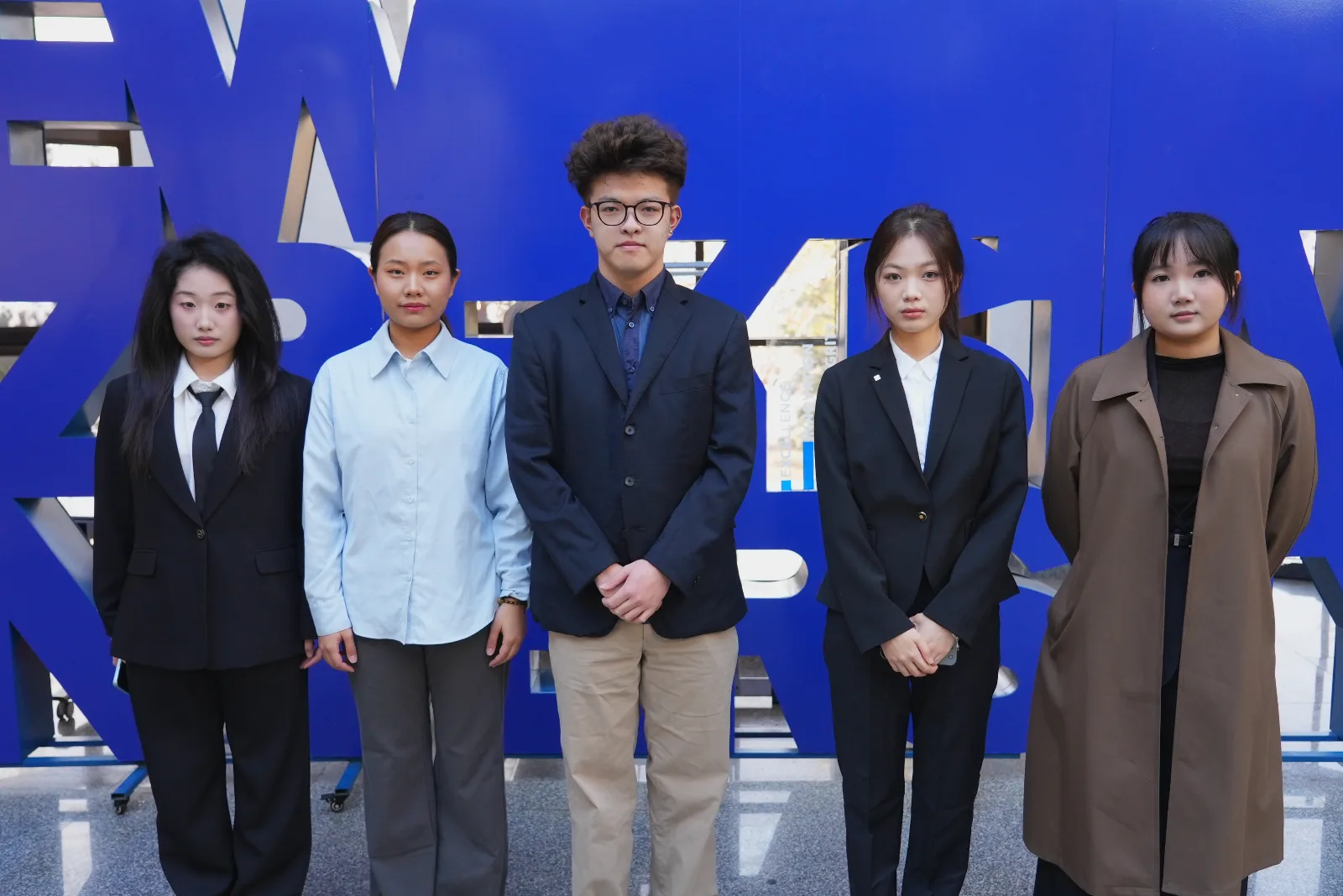
Chen Xuanxi

Julie Beaulieu

Wang Beijing
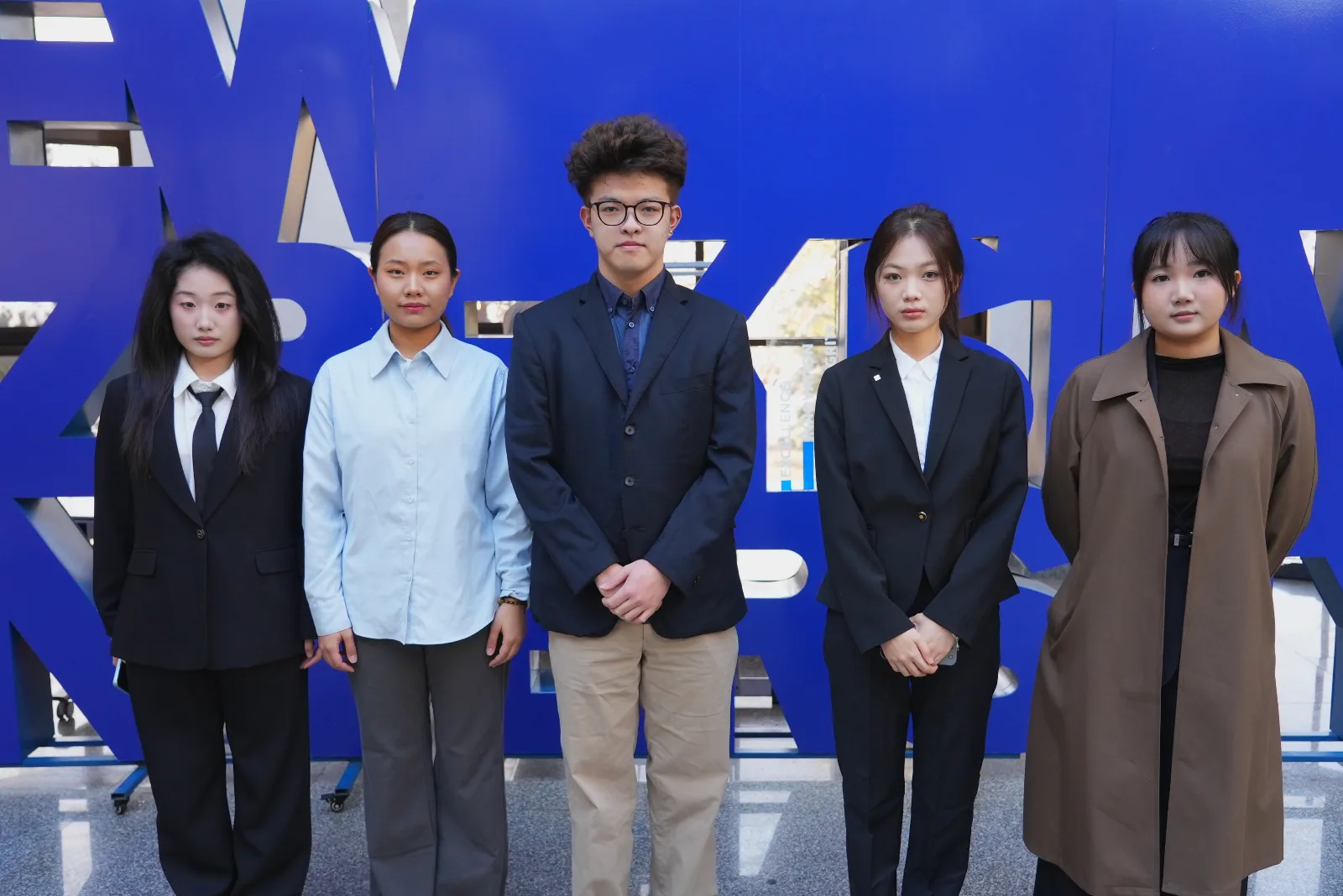
Cui Jiaqi

Guo Yaxuan