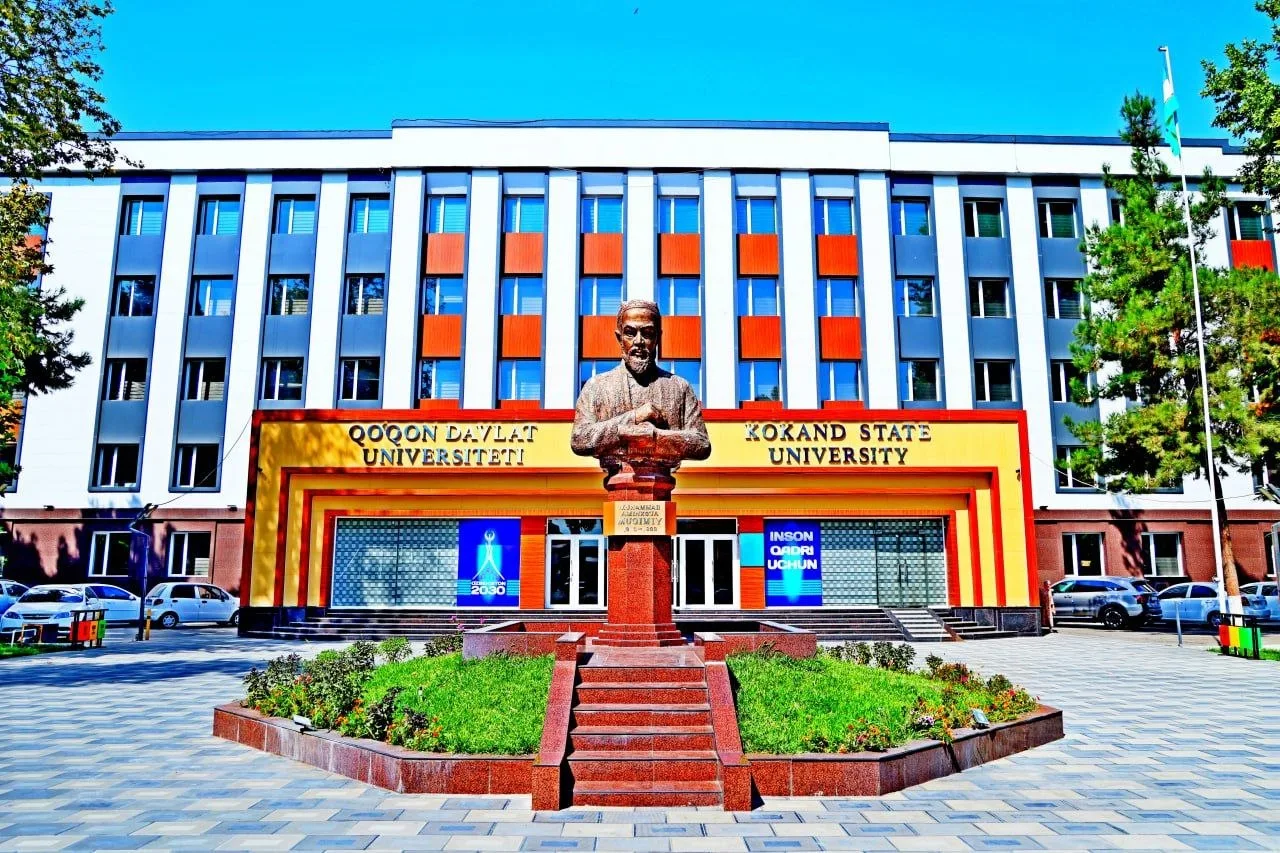
Kokand State University
18,187
Students
15
International students
720
Teaching staff
7
Faculties
28
Departments
1931
Founded
Video and photos
About the university
Kokand State University began its activities in January 1931 as an evening higher pedagogical institute located in the building of a pedagogical college. By Order No. 866 of the People’s Commissariat for Education of Uzbekistan in 1938, the evening pedagogical institute was transformed into an evening teacher training institute. According to the Order dated November 27, 1938, a distance consultation point was opened within the institute. From the 1939–1940 academic year, it was converted into a full-time state teacher training institute. In 1943, it became a women's teacher training institute, and in 1954, it was renamed as the State Pedagogical Institute for Women. In October 1943, the institute was named after the poet Muqimiy. Based on Presidential Decree No. PQ-3289 dated September 26, 2017, Kokand State University became part of the organizational structure of the Ministry of Higher Education, Science and Innovation of the Republic of Uzbekistan. Over the years, the university has grown from a small educational center into a major higher education institution.
Under the fundamental reforms being carried out in higher education, significant positive changes are taking place at Kokand State University. The university’s appearance is transforming, its material and technical base is improving, funding for scientific research and social support is increasing, including the income of professors and teachers. A close link has been established between higher education — science — and production, and new departments have been opened at the university. All this contributes to changing the approach to higher education and improving its quality and level. It is no secret that the President's proposals and decisions aimed at improving the functioning of pedagogical universities have encouraged us toward new achievements. Currently, more than 16,000 students are studying at our institute in 27 undergraduate and 16 graduate programs. Today, Kokand State University is one of the leading pedagogical institutions in our country that trains modern teaching staff. The university boasts a modern infrastructure: 269 classrooms, 21 fully equipped teaching laboratories, one stadium, 4 basketball and volleyball courts, 3 indoor sports halls, a modern academic library, computer rooms in faculties, student dormitories with full amenities in 3 buildings, and a dining hall for 250 students. Joint education programs are also established with 4 foreign universities: Bashkir State Pedagogical University named after Akmulla (Russia), Russian State Vocational Pedagogical University, Kazan Federal University, and Grodno State University named after Yanka Kupala (Belarus). A total of 168 students are enrolled in joint programs, and those who complete the program successfully receive dual diplomas. Currently, the institute employs 517 qualified professors and teachers, including 10 doctors of sciences, professors, and over 170 PhDs and associate professors. To implement the tasks identified during the video conference chaired by the President of Uzbekistan on June 16, 2021, titled “The effectiveness of reforms in higher education and preparation for the new academic year,” a mechanism was developed to ensure the international internship and professional development of faculty members. As a result, many professors and teachers have been sent abroad for academic internships, and students for practical training. Encouraging progress is also being made in scientific research. The university’s scientific journal, "Kokand SU. Scientific Bulletin", has been included in the list of recognized academic journals in chemistry, biology, history, and philology by the Presidium of the Higher Attestation Commission under the Cabinet of Ministers of Uzbekistan.
The decision of the Higher Attestation Commission Presidium "On the approval of the regulations for conducting qualification exams" has allowed the institute to conduct qualification exams in foreign languages and additional subjects. According to the decision of the Higher Attestation Commission, the Qoqon State University scientific council is operating in the specialties of Uzbek language, theoretical linguistics, applied linguistics, and computer linguistics.
The decree of the President of the Republic of Uzbekistan dated September 9, 2021, “On further supporting talented youth studying in higher educational institutions and engaging in scientific research,” marked an important step in supporting gifted students. This year, the number of students awarded state scholarships has increased. Thirteen students have earned the President’s scholarship, reflecting the nurturing of future leaders in the era of the Third Renaissance.
The university offers various opportunities for students to express their talents in art, literature, culture, and information technology, in line with the five key initiatives proposed by the President. The "Tarona" artistic amateur dance ensemble, "Ohangrabo" youth maqom ensemble, and the "Parvoz" theater studio are operational.
Students of the university are achieving excellent results in national and international arenas. Notably, the achievement of Mohigul Hamdamova, a student from the Faculty of Physical Culture, winning the gold medal at the Tokyo Paralympic Games was a significant milestone in the university's history.
To contribute to filling the domestic food market and create jobs, the Qoqon State University has launched a modern bakery workshop based on Chinese technology. The workshop, capable of producing 1,500 molded loaves per day, provides quality and affordable bread to consumers and ensures employment for students.
In response to the five initiatives proposed by the President for youth work, the university established the "Young Artisans' House" to organize students' leisure time productively, enhance their academic experience, and strengthen the integration between education, science, and production. The enterprise combines pottery, furniture production, confectionery, textile weaving, and sewing workshops.
At present, furniture items for educational institutions, ranging from furniture designed for student dormitories to kitchen and residential furniture, are being produced with modern furniture manufacturing and pressing equipment imported from China, Turkey, and Italy. The products differ fundamentally from previous furniture in terms of their smoothness, durability, water resistance, softness, aesthetic appearance, and long-lasting shape. The furniture being produced maintains its color, lasts several times longer compared to conventional furniture, and retains its shape over time. Currently, in the furniture manufacturing workshop, two-tiered beds, bedside tables, wardrobes, chairs, desks, and book shelves are being produced for the student dormitories of educational institutions.
In our country, great attention is being paid to the development of handicrafts, which are symbols of our history and national identity. The work of artisans is highly valued, and opportunities and privileges are being created for them. Representatives of this field are making a significant contribution to creating new jobs, engaging youth in social labor, and promoting tourism. The establishment of sewing, adras and atlas production workshops, and pottery workshops at the Faculty of National Handicrafts and Applied Arts of the Institute is a reflection of the high attention paid to the handicraft sector. Most importantly, with the launch of these workshops, students are now able to not only gain practical experience during their studies but also have the opportunity to work. Working at the enterprise allows students to acquire practical skills and consolidate the theoretical knowledge they have gained. The modern IT park at the institute is playing a significant role in training future specialists with modern knowledge and skills. Work is underway to support promising startup projects. The park, which includes a conference hall, a classroom, a sound recording studio, and a mini kitchen, is capable of serving 50 students at a time. It can be said that the first projects in the field of information technology are successfully being implemented here.
For international students


International partnerships


Language courses
{}
Opportunities for students
Talabalar muvaffaqiyatga erishmoqda
Faculties
The faculty is focused on training highly qualified pedagogical specialists.
Modern teaching methods and international cooperation are actively implemented.
Faculty Mission
Training teachers who meet international standards and educational requirements.
Statistics
Students: 1200
Full-time: 900
Part-time: 300
Professors: 38
Academic potential: 60%
About the Faculty of Philology
The Faculty of Philology consists of 4 departments with a total of 117 professors and lecturers.
The faculty offers training in 3 undergraduate programs in both full-time and part-time formats. A total of 3,602 students are currently enrolled (3,260 full-time and 342 part-time).
Academic Capacity
The overall academic capacity of the faculty is 50%. It includes 5 Doctors of Science, 5 Professors, 49 Associate Professors, and 47 Candidates of Science and PhD holders.
About the Faculty of Exact Sciences and Digital Technologies
The faculty is focused on training highly qualified specialists in modern digital technologies and exact sciences.
The learning process involves the use of the latest programming languages, mathematical modeling, data analysis, and artificial intelligence.
Faculty’s Goal
To train specialists with in-depth knowledge in digital technologies and exact sciences, capable of innovative thinking and possessing advanced programming skills.
Modern Approaches
-
Courses taught in English
-
Modern IT laboratories
-
International programming competitions
-
Tutoring system
-
Electronic document exchange
About the Faculty
The Faculty of Social Sciences was established in 2017 and offers modern knowledge and innovative approaches for the development of society.
More than 1,200 students study at the faculty in full-time and part-time programs.
Mission of the Faculty
To provide students with modern social knowledge and prepare them for active participation in society.
Statistics
-
1200+ students
-
Full-time: 800+
-
Part-time: 400+
-
45 professors and teachers
-
Academic potential: 51%
The faculty was established by Resolution No. 754 of the Cabinet of Ministers of the Republic of Uzbekistan on September 22, 2018.
Currently, the faculty offers 12 study programs, 5 master’s programs, 3 doctoral programs, and has more than 1281 students. It is one of the leading engineering institutions in the Fergana Valley.
Mission of the Faculty
An engineer is a resource who contributes to society and can solve real-world problems.
Educational Features
-
Education based on curricula of TOP-300 universities
-
Dual education system
-
“Student–University–Enterprise” principle
-
Modern laboratory equipment
-
“Mentor–Student” principle
About the Faculty of Chemical Technologies and Natural Sciences
The faculty began its activities on April 4, 1998, based on Order No. 56-U of the institute’s rector, when it was separated from the General Technical Faculty and established as an independent “Chemistry-Geography” faculty.
On January 24, 2025, after Kokand State University received its university status, the faculty was renamed the “Faculty of Chemical Technologies and Natural Sciences.” This name reflects the integration of technological disciplines, innovative chemical developments, as well as biological and ecological research.
Academic Capacity
The overall academic capacity is 61.1% — 72 professors and teachers work here, including 40 PhDs, 4 Doctors of Science, 4 Professors, and 22 Associate Professors.
Education Statistics
Total students: 1051
Full-time: 881
Part-time: 170
Study programs: 4
About the Faculty of Art Studies and Sports
The faculty was established on the basis of the Fergana Regional Branch of the Uzbekistan State Institute of Arts and Culture in accordance with the Resolution of the President of the Republic of Uzbekistan No. PQ-3218 dated August 16, 2017.
Initially, the faculty enrolled 103 students in 5 educational programs. Today, as part of Kokand State University, it operates with more than 3,100 students across 27 undergraduate programs and 9 master’s specialties.
Mission of the Faculty
Creativity, mastery in arts and sports, and comprehensive development…
Educational Features
-
Curriculum based on TOP-500 universities
-
“Ustoz-shogird” (Mentor-apprentice) system
-
Modern classrooms and facilities
-
Nearly 20 monographs published
-
“Incubation and Acceleration Center”
Fields of study
| Accounting and auditing (in agriculture) 60410200 | Bachelor |
| Acting: Dramatic Theater and Film Acting 60211100 | Bachelor |
| Acting: Musical Theatre Acting 60211100 | Bachelor |
| Applied arts (art ceramics), 60210800 | Bachelor |
| Artificial Intelligence 60610500 | Bachelor |
| Artificial intelligence 60610500 | Bachelor |
| Automation and management of technological process and production (technical sciences) 60710900 | Bachelor |
| Banking 60410600 | Bachelor |
| Basics of geography and economic knowledge 60111000 | Bachelor |
| Biology 60510100 | Bachelor |
| Cadastre. 60721700 | Bachelor |
| Chemical Engineering 60710100 | Bachelor |
| Chemistry 60110800 | Bachelor Master's |
| Corporate governance 60410900 | Bachelor |
| Ecology and environmental protection 60520200 | Bachelor |
| Electrical Engineering 60710500 | Bachelor |
| Electronics and instrumentation 60710700 | Bachelor |
| Field of study: Vocal art (Traditional singing) 60211400 | Bachelor |
| Fine arts and engineering graphics 60110500 | Bachelor |
| Foreign language and literature (English) 60110900 | Bachelor Master's |
| Foreign language in pre-school and primary education (English) 60112600 | Bachelor |
| Geodesy and geoinformatics 60721500 | Bachelor |
| Geography 60530200 | Bachelor |
| History 60220300 | Bachelor |
| Human resource management 60411000 | Bachelor |
| Information and communication technologies 60610100 | Bachelor |
| Information technologies in education 70110105 | Master's |
| Library information activities 60320400 | Bachelor |
| Light industrial engineering. 60720700 | Bachelor |
| Logistics and Supply Chain Mangement 61010400 | Bachelor |
| Management of educational establishments 70110103 | Master's |
| Management. 60410800 | Bachelor |
| Mathematics 60540100 | Bachelor |
| Mathematics and informatics 60110600 | Bachelor |
| Methods of teaching exact and natural sciences (mathematics) 70110601 | Master's |
| Music Education and Arts (Master's Degree) 60110600 | Bachelor |
| Music education 60110600 | Bachelor |
| National idea, the fundamentals of spirituality and law education 60111100 | Bachelor |
| Native Language and Literature: Kyrgyz Language and Literature 60110700 | Bachelor Master's |
| Pedagogy 60110100 | Bachelor |
| Pedagogy (teacher of additional education) 60110100 | Bachelor |
| Pedagogy and psychology 70110102 | Master's |
| Pedagogy and psychology of preschool education 60110300 | Bachelor |
| Philology and Language Teaching: German Language 60230100 | Bachelor |
| Philology and Language Teaching: Russian Language 60230100 | Bachelor |
| Philosophy 60220500 | Bachelor |
| Physical culture 60112200 | Bachelor |
| Physics 60530500 | Bachelor |
| Physics and astronomy 60110700 | Bachelor |
| Power Engineering 60710400 | Bachelor |
| Preschool Education 60110200 | Bachelor |
| Primary education 60110400 | Bachelor |
| Psychology 60310300 | Bachelor |
| Psychology (applied psychology) 60310900 | Bachelor |
| Special pedagogy 60110300 | Bachelor |
| Special pedagogy (activity of sign language interpreters) 60112700 | Bachelor |
| Special pedagogy (logopedia) 60110300 | Bachelor |
| Special pedagogy defectology (surdo-pedagogy) 70110401 | Bachelor Master's |
| Special pedagogy, defectology (logopedics) 70110401 | Bachelor Master's |
| Sports Activities 61010200 | Bachelor |
| Sports Culture 60111200 | Bachelor |
| Sports activities (volleyball) 61010200 | Bachelor |
| Sports activities: Football (US: Soccer) 61010200 | Bachelor |
| Sports classes (struggle) 61010200 | Bachelor |
| Technological education 60111300 | Bachelor |
| Technological machinery and equipment 60720400 | Bachelor |
| The theory and history of pedagogy (by the type of activity) 70110101 | Master's |
| The theory and method of education (pre-school education) 70110201 | Bachelor Master's |
| Theory and Methodology of Education and Training (Primary Education) (Master's Degree) 60110400 | Bachelor |
| Theory and method of education (primary education) 70110501 | Master's |
| Tool ment performance (folk instruments) 60211500 | Bachelor |
| Translation Theory and Practice: English / Russian / German 60230200 | Bachelor |
| Uzbek language and literature 70111401 | Bachelor Master's |
| Vehicle engineering (by type) 60711400 | Bachelor |
Programmes
All programmes →
Kokand State University
Special pedagogy (logopedia)
—
Kokand State University
Applied arts (art ceramics),
—
Kokand State University
Iqtisodiyot
—
Kokand State University
Banking
—
Kokand State University
Philology and Language Teaching: Russian Language
—
Kokand State University
Special pedagogy (logopedia)
—
Kokand State University
Iqtisodiyot
—
Kokand State University
Psychology (applied psychology)
8 250 000 so'm
per year
Kokand State University
Uzbek language and literature
8 250 000 so'm
per year
Kokand State University
Foreign language and literature (English)
9 325 524 so'm
per year
Kokand State University
Methods of teaching exact and natural sciences (mathematics)
9 325 524 so'm
per year
Kokand State University
Economics
—
Notable alumni
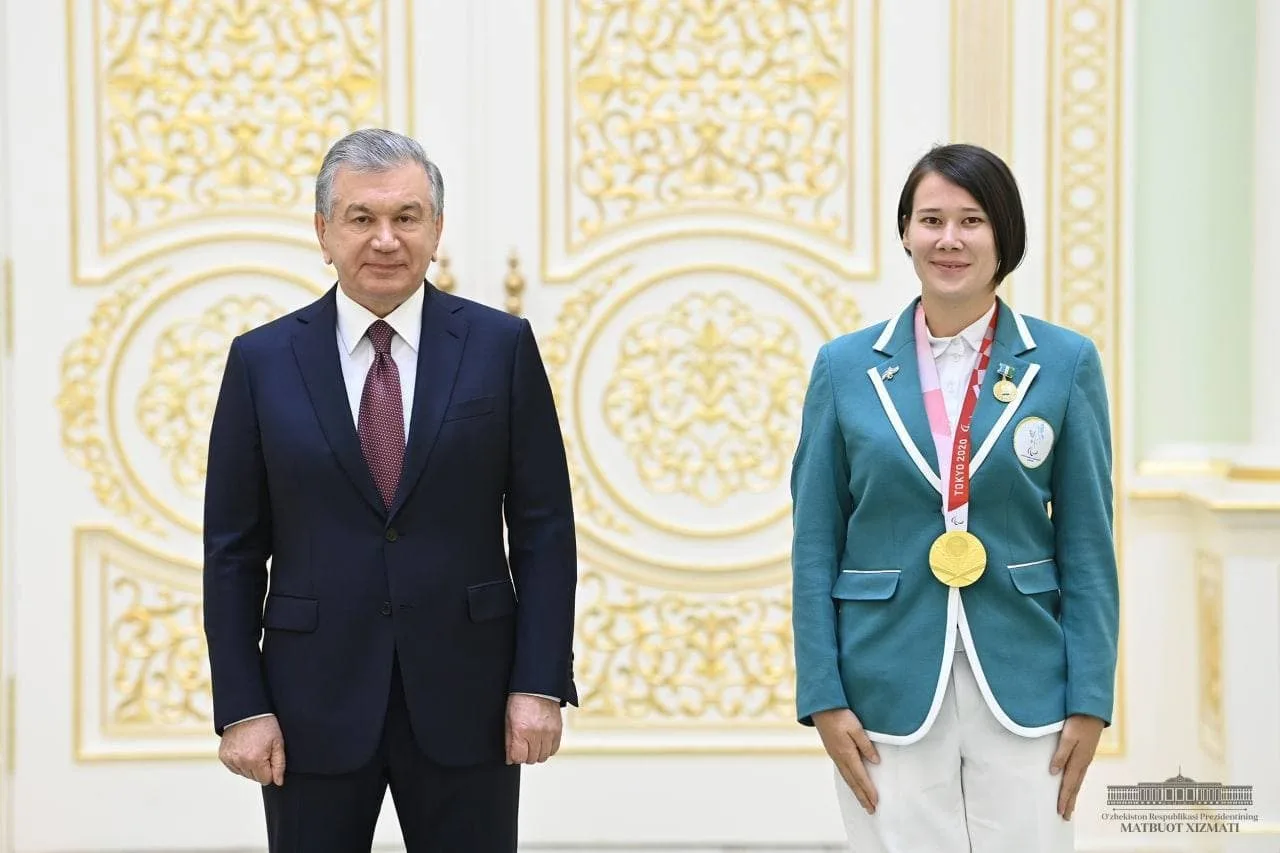
🥇Tokyo-2020: Kokan State Pedagogical Institute student Mohigul Hamdamova won the gold medal

Бектемир Розматжон огли Меликозиев