
State Conservatory of Uzbekistan
1,154
Students
16
International students
232
Teaching staff
2
Faculties
0
Departments
1936
Founded
Video and photos
About the university
History and Academic Activities of the State Conservatory of Uzbekistan
The Tashkent State Conservatory was established in 1936, evolving from a higher musical educational institution founded in 1934. In its early years, renowned pedagogues sent to Uzbekistan from the Moscow Conservatory, including Viktor Tsukkerman, Lev Danilevich, and Yuri Fortunatov, taught at the institution. The second wave of Russian musical figures arrived in Tashkent during the evacuation period of the Great Patriotic War. This significantly contributed to the foundation of the university and the advancement of musicology in Uzbekistan.
For a long period, the Conservatory was the only institution of its kind in Central Asia, training highly qualified specialists for musical institutions throughout the entire region. Graduates of the conservatory went on to work in the leading musical theaters of neighboring Soviet republics, including Kazakhstan, Kyrgyzstan, Tajikistan, and Turkmenistan.
One of the key areas of the conservatory's activity was the study of the musical heritage of Uzbekistan. Departments for the history and theory of music of national traditions were established, and since 1972, a special department of Oriental music has been operational. Since 1939, the V. A. Uspensky Central Music Boarding School has been functioning, which has currently been transformed into an Academic Lyceum for Gifted Children.
In 1976, the Conservatory was named in honor of Mukhtar Ashrafi, who served as its rector from 1971 to 1975. In 2002, by decree of the President of the Republic of Uzbekistan, the Tashkent Conservatory was reorganized into the State Conservatory of Uzbekistan.
The Conservatory of Uzbekistan comprises 2 faculties, 15 departments, and offers undergraduate (Bachelor's), graduate (Master's), assistantship-internship, postgraduate, and professional development programs. It also includes the Academic Lyceum for Gifted Children. More than 1,000 students and pupils study composition, musicology, choral and operatic-symphonic conducting, European classical, national, and pop performance (both staging and vocal disciplines), modern technologies (musical sound engineering), and musical pedagogy.
Furthermore, its structure features a musical theater studio, symphonic and Uzbek folk wind instrument orchestras and ensembles (such as the Fakhriddin Sadikov "Maqam" Ensemble, a big band, string quartets, etc.), choral groups, the "National Instruments" museum and scientific-production laboratory, a specialized research center, the "Music" publishing house, a phonoteca, a library, the "Folk Music Creativity" laboratory, and sound recording studios.
Over the years, notable figures such as K. Lisovsky, V. Uspensky, Y. Peker, Nadezhdin, M. Ashrafi, A. Kozlovsky, B. Zeidman, N. Yablonovsky, Giyenko, H. Rahimov, N. Hoshimov, I. Akbarov, I. Rajabov, F. Sadikov, F. Karomatli, F. Mamadaliyev, M. Reyson, A. Gekkelman, V. Pulatov, and others have taught at the conservatory. In the 2004-2005 academic year, the conservatory employed 50 professors (including S. Kabulova, T. Alimatov, Z. Haqnazarov, K. Muhiddinov, O. Yusupova, F. Yanovsky, A. Odilov, T. Gafurbekov, R. Yunusov, among others) and more than 70 associate professors.
A crucial stage of the educational process at the Conservatory of Uzbekistan is its creative activity. The conservatory's team organizes and hosts more than 300 different concerts annually. Contributing to this performance activity are 38 People's Artists of Uzbekistan, Honored Artists of Uzbekistan, and other specialists holding honorary titles, as well as over 80 laureates of international and national competitions. The scientific and methodological work of the conservatory is primarily focused on Uzbek classical and modern music, the musical traditions of the peoples of Central Asia and the world, music theory and history, and performance practice issues.
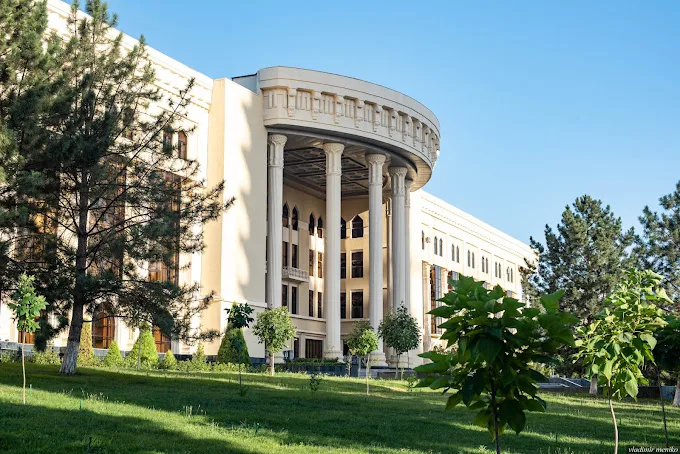
In 2002, a new building was constructed on the initiative of the First President of the Republic of Uzbekistan, Islam Karimov (Chief Architect: V. Spivak; Architects: A. Kalislomov, R. Shokirov, etc.; Artists: O. Khabibulin, V. Gan, R. Khudoyberganov, etc.), equipped with state-of-the-art facilities and instruments. The total area spans 35,180 square meters, which includes 305 auditoriums, 4 concert halls, 4 recording studios, gyms, and various other amenities.
Prior to 1939, the Tashkent Conservatory was located in the former building of the higher musical educational institution. Later, it moved into the ballet school building, designed by architects V. Brilevich, N. Goloshanov, and A. Sidorov in the "Stalinist Empire" style. In the 1990s, by order of President Islam Karimov, construction began on a new building in the national style on Botir Zokirov Street. The old building was transferred to the Hamza Music College and was subsequently demolished in 2010.
In 2020, Kamoliddin Urinbaev was appointed Rector of the Conservatory. The scientific and methodological journal "Music" is published 4 times a year at the State Conservatory of Uzbekistan, and the online version of the "Eurasian Journal of Musical Sciences" is published twice a year.
Structure of the State Conservatory of Uzbekistan
The State Conservatory of Uzbekistan consists of 2 faculties and 15 departments:
FACULTY OF MUSICAL ARTS
-
Department of Academic Singing and Opera Preparation
-
Department of Academic Choral Conducting
-
Special Piano Department
-
Department of Music Theory
-
Department of History and Criticism of Music
-
Department of Accompanist Skills
-
Department of Chamber Music
-
Department of Composition and Instrumentation
FACULTY OF INSTRUMENTAL PERFORMANCE
-
Department of String Instruments
-
Department of Wind and Percussion Instruments
-
Department of Performance on Folk Instruments
-
Department of Orchestral Conducting
 |
 |
 |
 |
 |
 |
For international students
The Department of International Relations informs foreign citizens wishing to study at the State Conservatory of Uzbekistan:
Bachelor's education is carried out on a paid contract basis and is set at $3,300 for the 1st year. You will be provided with a hostel. 500 thousand soums were allocated for the hostel for 1 month.
Master's studies are carried out on a paid contract basis and are set at $3,630 for the 1st year. You can use the library and audio library for free at the undergraduate and graduate levels. Training is conducted in Uzbek and Russian languages. After successful completion of bachelor's and master's degrees, you will receive a diploma in Uzbek, Russian and English. From June 25 to July 5, 2024, the leadership of the State Conservatory of Uzbekistan will be able to collect documents and take entrance exams for the bachelor’s level.
Documents for master's programs are accepted from July 1 to July 30. An entry visa to the Republic of Uzbekistan will be issued to you for a period of 1 month, during which time you will pass the exam, conclude an agreement and complete documents. To obtain an entry visa to the Republic of Uzbekistan, you must send the following documents to the State Conservatory of Uzbekistan (translated into Russian or Uzbek and certified by a state notary office):
• Copy of national passport.
• Copy of diploma
• Picture ¾ - 10 pcs.
• Certificate from your place of work.
• Medical certificate
• Summary
International partnerships
|
1 |
Estonian Academy of music and theatre |
Estonia Tallinn |
2014-2019 |
|
2 |
Ya.Latvian musical academy named after Vitols Republic of Latvia
|
Riga
|
2015-2020
|
|
3 |
Republic Of China Nations Northwest University |
China Republic Of China |
2015-2020 |
|
4 |
Conservatory of Santa Chechilia Italian Republic
|
Rome
|
2015-2020
|
|
5 |
Kazakh National University of Arts
Kazakhstan
|
Astana
|
2015-2020
|
|
6 |
Korean musical education Team South Korea
|
Seoul |
2016-2021
|
|
7 |
Hannover Piano Academy Federal Republic of Germany
|
Hanover
|
2016-2021
|
|
8 |
Daulin Art College of the people's Republic of China
|
Republic of China, Daulin |
2017-2022
|
|
9 |
Kashgar University of the people's Republic of China
|
Republic of China, Kashgar |
2017-2022
|
|
10 |
Azerbaijan State University of culture and arts
|
Baku
|
2017-2022
|
|
11 |
P.I.Moscow State Conservatory named after Tchaikovsky Russian Federation
|
Moscow
|
2017-2022
|
|
12 |
Shanghai Conservatory of music people's Republic of China
|
Shanghai
|
2017-2022
|
|
13 |
Baku music academy named after Uzeir Gadjibekov Republic of Azerbaijan
|
Baku
|
2017-2022
|
|
14 |
Azerbaijan National Conservatory Republic of Azerbaijan
|
Baku
|
2017-2022
|
|
15 |
di Musica San Pietro a Majella Conservatory Italian Republic,
|
Naples
|
2018-2023
|
|
16 |
Turkey Ardahan Universiade
|
Republic Of Turkey |
2018-2023
|
|
17 |
N.A. St. Petersburg State Conservatory named after Rimsky-Korsakov Russian Federation, St.
|
Petersburg
|
2019-2024
|
|
18 |
P.Tchaikovsky Ukrainian National Academy of music
|
Republic Of Ukraine, Kiev
|
2019-2024
|
|
19 |
Russian Academy of music named after Gnesins
|
Russian Federation, Moscow
|
2019-2024
|
|
20 |
T.National Conservatory of Tajikistan named after Sattorov
|
Tajikistan, Dushanbe
|
2020-2025
|
|
21 |
Chung-Ang University
|
Korea, Seoul
|
2021-2026
|
|
22 |
Verdi Milan Conservatory
|
Italy, Milan
|
2021-2026
|
|
23 |
Osh State Pedagogical University Kirgizstan,
|
Osh
|
2021-2026
|
|
24 |
Kiev art academy named after Pavel Chubinsky
|
Ukraine, Kiev
|
2021-2026
|
|
25 |
Czech Academy of music Czech Republic |
Prague
|
2021-2026
|
|
26 |
Kurmangazi National Conservatory of Kazakhstan Republic of Kazakhstan,
|
Almaty
|
2022-2027
|
|
27 |
Belarusian State Music Academy Republic of Belarus
|
Minsk
|
2022-2027
|
|
28 |
M.Nizhegorodskaya State Conservatory named after Glinka Russia,
|
Nizhny Novgorod |
2022-2027 |
|
29 |
N.Kazan State Conservatory named after Zhiganov Russia,
|
Kazan
|
2023-2028
|
|
30 |
Shuan Conservatory of Music China
|
Shuan
|
2023-2028
|
|
31 |
S.Tajik State Academic opera and Ballet Theater named after Tajikistan
|
Dushanbe
|
2023-2028
|
|
32 |
Casella Music Conservatory
|
Italy
|
2023-2028 |
|
33 |
L.V. Sobinov State Conservatory
|
Russia
|
2023-2028
|
|
34 |
Institute of scientific research of the history of the arts of the Russian Federation
|
Russia
|
2023-2028
|
Language courses
{}
Opportunities for students
I sincerely congratulate the students of the State Conservatory of Uzbekistan on receiving State Scholarships of the Republic of Uzbekistan!
Kozimjonova Mohigul (3rd year, folk instruments) - Alisher Navoi Scholarship;
Gabrielyan Nikola (4th year, composition) - Islam Karimov Scholarship.
Don't stop there! You are our pride!
Faculties
Chair of inflatable and percussion instruments
Department of Orchestra Conducting
Department of academic singing and opera preparation
Department of academic choral conducting
History of Music and Criticism
Department of composition and instrumentation
Fields of study
| Art studies (musicology) 60211000 | Bachelor |
| Field of study: Performance (by types) 60211300 | Bachelor Master's |
| Instrumental performance: folk instruments | Master's |
| Instrumental performance: stringed instruments | Master's |
| Instrumental performance: wind and percussion instruments | Master's |
| Man-made art: musical sound direction 60210100 | Bachelor |
| Music education 60110600 | Bachelor |
| Music education and the arts 70111301 | Master's |
| Musical Performance (by types) 60211500 | Bachelor Master's |
| Piano (organ) 70211501 | Master's |
| Professional education (by fields) 60112400 | Bachelor |
| Sound Direction: Music Sound Direction 70210101 | Master's |
| The art of composition 60210900 | Bachelor |
| The art of music 70211002 | Master's |
| Vocal art (by types) 60211400 | Bachelor |
| Vocal art: academic singing 70211401 | Master's |
Programmes
All programmes →
State Conservatory of Uzbekistan
Instrumental performance: stringed instruments
38 900 000 so'm
per year
State Conservatory of Uzbekistan
Instrumental performance: wind and percussion instruments
42 000 000 so'm
per year
State Conservatory of Uzbekistan
Instrumental performance: folk instruments
42 000 000 so'm
per year
State Conservatory of Uzbekistan
Vocal art: academic singing
42 000 000 so'm
per year
State Conservatory of Uzbekistan
Piano (organ)
42 000 000 so'm
per year
State Conservatory of Uzbekistan
Field of study: Performance (by types)
38 900 000 so'm
per year
State Conservatory of Uzbekistan
The art of composition
42 075 000 so'm
per year
State Conservatory of Uzbekistan
Musical Performance (by types)
38 900 000 so'm
per year
State Conservatory of Uzbekistan
Musical Performance (by types)
38 900 000 so'm
per year
State Conservatory of Uzbekistan
Musical Performance (by types)
38 900 000 so'm
per year
State Conservatory of Uzbekistan
Musical Performance (by types)
38 900 000 so'm
per year
State Conservatory of Uzbekistan
Vocal art (by types)
38 900 000 so'm
per year
Notable alumni
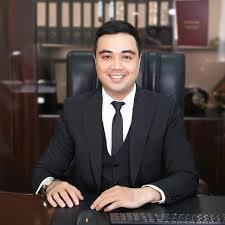
Kamoliddin Uribaev
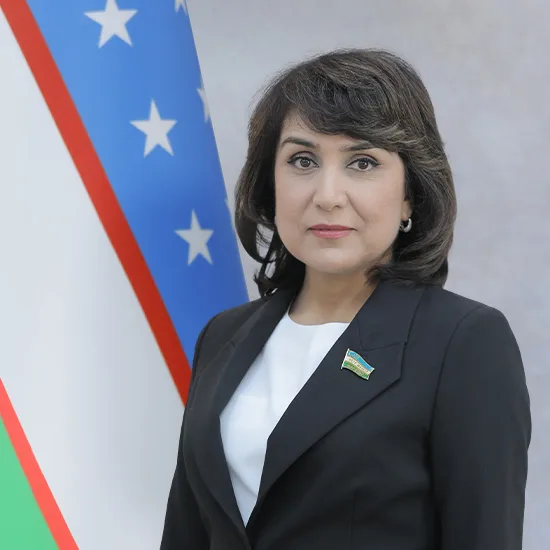
Oydin Abdullaeva
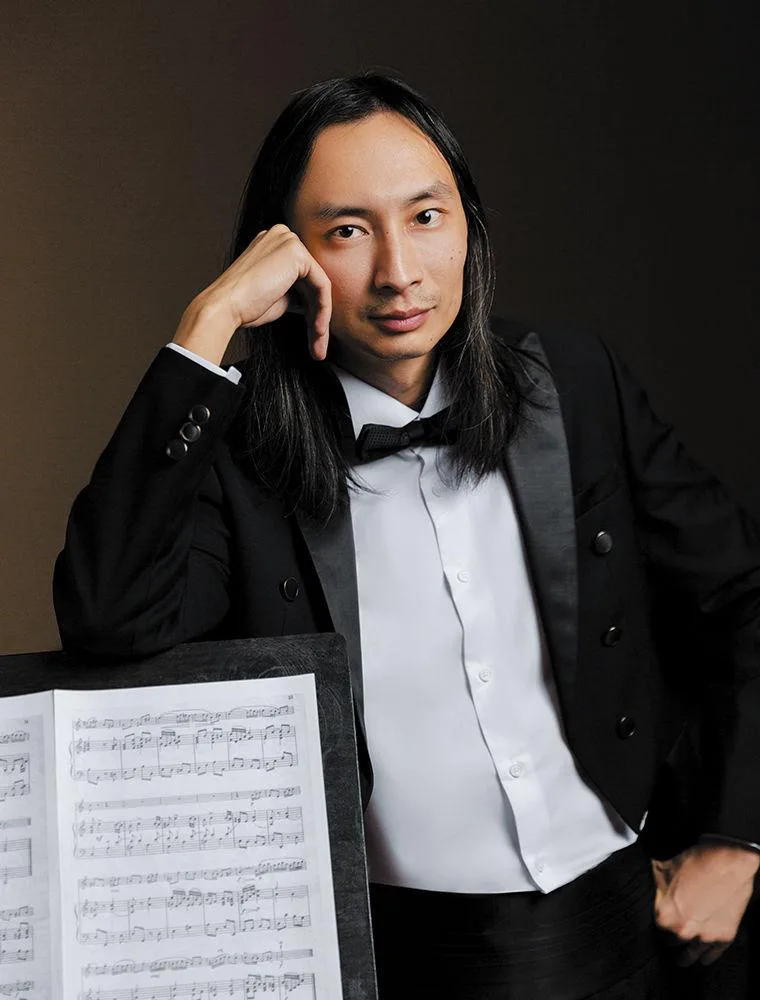
Alibek Kabdurakhmanov
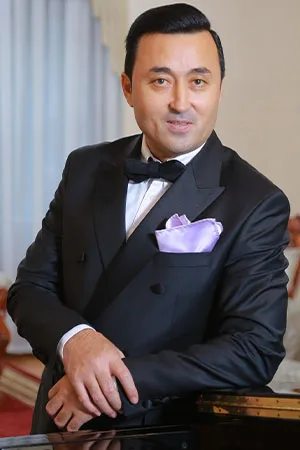
Ramiz Usmanov