Nukus state pedagogical institute named after Ajiniyaz
13,489
Students
1
International students
547
Teaching staff
7
Faculties
26
Departments
1934
Founded
Video and photos
About the university
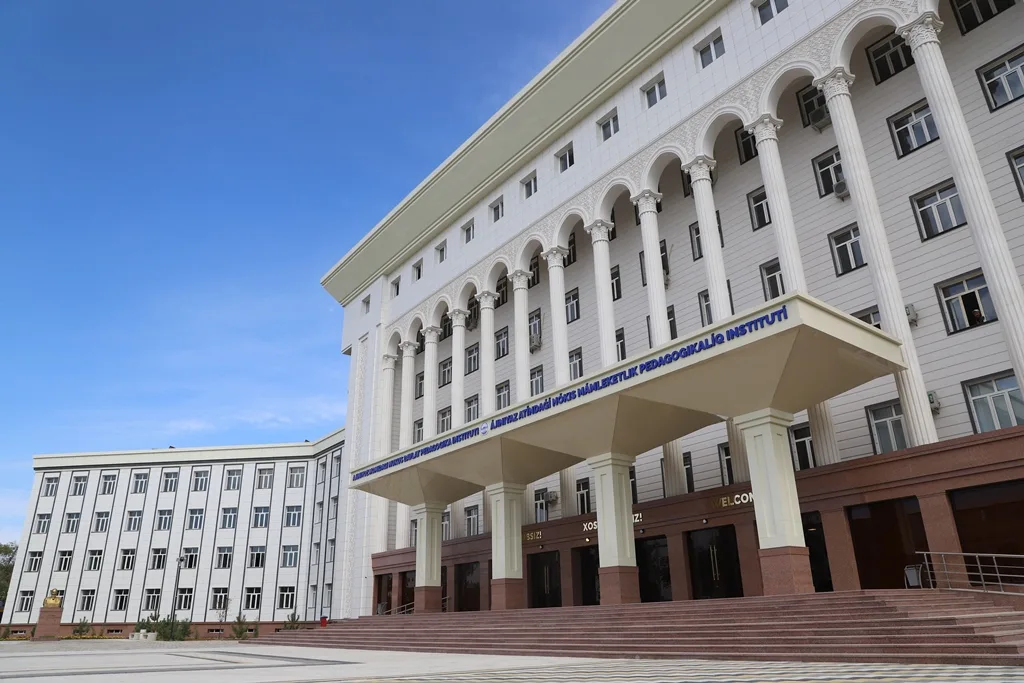
Nukus State Pedagogical Institute occupies a special place in the development of science, education, culture, economics, history and other areas of the Karakalpak people. The 90-year history of the Nukus State Pedagogical Institute is an integral part of the history of the Karakalpak people.
The Pedagogical Institute, founded in 1934, is the largest scientific institution, forming the basis of later higher educational institutions and research work in Karakalpakstan. As Hero of Uzbekistan I. Yusupov wrote:
“The Karakalpak has a thick book,
You know how to bless."
Nukus State Pedagogical Institute named after Aginez is one of the prestigious higher educational institutions of the Republic of Uzbekistan and was first established in the city of Tortkol, the then capital of Karakalpakstan. The institute started its activities with 12 teachers and 42 students.
Educated and intelligent people of that time V.P. Vertegov, I. Ibragimov, R. Rakipov, D. Bazarov, Y. Dosumov, T. Bekimbetov, Zh. Orimbaev headed the institute and laid its foundation.
Among the first in history were famous scientists, cultural figures, poets and writers of the Karakalpak people N. Daugarayev, S. Bulatov, R. Risaliev, I. Sagiytov, A. Begimov, O. Boleshov, K. Avezov. founded a pedagogical institute... taught the secrets of science.
In 1937, the first graduates of 27 institutes were sent to schools in our republic. Among them were the famous sons and daughters of our people P. Nurpeisov, U. Lepesov, G. Erniyazova, Zh. Adilov, T. Aralbaev.
In 1942, the Pedagogical Institute continued its activities in the city of Chimboy. During this period, S. Kamalov, Zh. Aralbaev, S. Bekmuratov, A. Yesemuratov, U. Shalekenov, N. Aminov worked as teachers.
During the fiery years of the war, 16 teachers and students of the institute M. Galekeev, A. Yunusov, A. Bekbasov, A. Nurmanov, A. Panabergenov, R. Saparov, A. Rajapov and other volunteers took part in the Second World War and saved our country from the scourge of fascism. They defended it like heroes. Plis Nurpeisov, a graduate of the institute’s physics and mathematics department, was a test pilot in World War II and was awarded the title of Hero of the Union.
In 1945-1946, 32 teachers worked at the institute, including 1 professor, 7 associate professors and candidates of science. The number of faculties, departments, teachers and students increased from year to year.
In 1953-1954, 890 students studied at the institute, 102 teachers worked in 13 departments, including 1 professor, doctor of chemical sciences and 15 teachers with academic degrees. In the 1960s, scientists K. Ayimbetov, S. Akhmetov, Zh. Orinboev defended their doctoral dissertations. A. Tadzhimuratov, A. Kydyrboev and G. Petrov were awarded the title of professor. By 1964, 4,254 students were educated at 7 faculties of the institute: 2,054 full-time and 2,200 part-time. They were prepared by 200 professors and teachers from 21 departments, including 1 doctor of science, 36 candidates of science and associate professors.
At that time, the institute was actively assisted in the training of teachers at the academic level by higher educational institutions and research institutes in the cities of Tashkent, Moscow and Kyiv, and many teachers from our institute were sent to graduate school to exchange experience. Professors from Tashkent: T. Sarimsakov, S. Sirojiddinov, L. Volkovsky, N. Romanov, B. Levin, I. Ardzhanykh, Kh. Rasulov, A. Ayupov, D. Babaev, Kiev professors: I. Kandilenko, G. Svetkov , I. Kharchenko, G. Sidorenko, associate professors V. Solonko, I. Skripniklar came to the pedagogical institute and gave lectures to our students.
Many boys and girls who graduated from the pedagogical institute became prominent government figures in Karakalpakstan. Among them are the Heroes of Labor K. Kamalov, B. Kurbanov, as well as those who served the people K. Rzaev, A. Gaipova, G. Abdirov, N. Koilibaev, A. Kazbekov, T. Shcherbekov, G. Yusupov, S. Kaniyazov should be mentioned, S. Saparov, S. Seitnazarov and other famous people.
During this period, K. Ubaydullaev, P. Tetyushev, S. Kamalov, K. Rzaev and T. Izimbetov worked as rectors.
In 1974, 250 students of the institute during the summer holidays selflessly participated in the construction of the Takhyatosh hydroelectric power station. As a result, among our students who participated in the construction, K. Koshchanov and M. Makhmudov were able to take part in the tenth World Youth Festival, held in Berlin. 4 students were awarded government medals, 39 students were awarded the honorary badge of the Supreme Council.
By 1975, the number of students at the institute increased to 4496, and the number of departments increased to 27. There are 240 teachers working here, 97 of them have an academic degree, the scientific potential is 40.4%. The number of teachers with academic degrees increased from year to year. During this period, academician of the FA of Uzbekistan M. Nurmukhammedov, corresponding member of the FA of Uzbekistan S. Kamalov, Akhmetov S., Reimov R., Maksetov K., Shalekenov U., Taubaev T., Berdimuratov E. R. Kosbergenov, Zh. Bazarbaev, A. Nurmakhanova was awarded the degree of Doctor of Science.
In 1976, on the basis of the pedagogical institute, the Karakalpak State University named after Berdak was founded, the staff of which was mainly provided by professors and teachers of the pedagogical institute.
By resolutions of the Cabinet of Ministers of the Republic of Uzbekistan dated August 20, 1990 No. 293 and the Council of Ministers of the Republic of Karakalpakstan dated September No. 223/9, the Nukus State Pedagogical Institute named after Ajiniyaz was recreated. 14, 1990.
Academician Zh. Bazarbayev, professors K. Kamalov, A. Nazhimov, M. Adzhibekov, B. Shamambetov, Zh. Ubbiniyazov, M. Mambetullaev, M. Tileumuratov, O. Asamatdinov were appointed to the position of rector of the newly created institute, in accelerating scientific and pedagogical Such famous scientists as Aleuov, O. Dospanov, K. Kurambaev, Yu. Ibragimov, G. Asenov, B. Allamuratov, B. Shcherbaev fruitfully worked in the work of the institute.
For international students
Currently, the Nukus State Pedagogical Institute is equipped with new and comfortable auditoriums, all textbooks and resources, they can read other resources in the libraries, and the issue of providing housing for foreign students, along with all students of our country, has been raised, 2. 3- and 5-bed bedrooms are commissioned with all conditions. Dormitories are equipped with all modern information technologies. All conditions are created for students to gain sufficient knowledge during the course of the lesson.
International partnerships
Currently, the Ajiniyaz Nukus State Pedagogical Institute has 63 agreements and memorandums for the development of scientific research and educational work based on international cooperation with universities ranked among the top 1000 in the world.
Twenty-three professors and specialists from universities and higher educational institutions ranked among the top 1000 in the world are involved in the institute's educational process. Currently, 1 student from the Republic of Kazakhstan is studying in the fields of primary education to study at Nukus State Pedagogical Institute.
By 2026, 63 agreements have been signed with universities from the Federal Republic of Germany, the Russian Federation, France, South Korea, China, Pakistan, Malaysia, Belarus, Kazakhstan, Kyrgyzstan, and Tajikistan, 15 of which are universities included in the TOP-1000. Currently, the institute has established joint educational programs with the Lincoln University of Malaysia in the field of preschool education, and with the L.N. Gumilyov Eurasian National University of the Republic of Kazakhstan in the fields of biology, chemistry, and the Kazakh language. 17 students are studying under these 4 joint educational programs.
Language courses
{}
Opportunities for students
OUT OF RESPECT FOR THE COUNTRY
HERO TEACHERS ARE OUR PRIDE
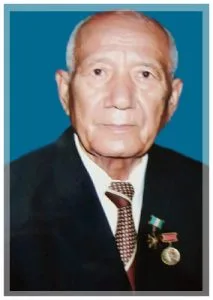
Allaniyaz Oteniyazov
Allaniyaz Oteniyazov entered the Faculty of Foreign Languages at the Karakalpak State Pedagogical Institute in 1956 and graduated in 1962. During his student years, he was distinguished by his hard work and deep learning, actively participated in the cotton harvest, collecting more than 15-16 tons of cotton annually, and became one of the leading young people. From 1962 to 2002 he worked as a teacher in the 4th school in the Nukus region. Since 1954, during the summer holidays in the area of his residence, he devoted himself to charity, provided the poor, disabled and orphans with 40 houses, 2 schools, 30 houses, built 2 kindergartens, 2 rural medical centers, 1 library building and donated them to the people. In 2000, he created gardens on an area of 15 hectares. The work of Allaniyaz Oteniyazov was appreciated, he was awarded the honorary title of Honored Teacher of Karakalpakstan, People's Teacher of Uzbekistan, Breeder of Uzbekistan and was awarded the Order of Labor Glory.
The honorable work of Allaniyaz Oteniyazov was highly appreciated; in 2001 he was awarded the title of Hero of Uzbekistan.
Vera Borisovna Pak
Vera Pak entered the Faculty of Natural Sciences and Geography of the Karakalpak State Pedagogical Institute in 1956 and successfully graduated in 1961. He began his career in 1961 as a teacher of chemistry and biology at the 3rd school in Khiva. In 1984-1985 he worked as an inspector of the public education department of the city of Khiva. Since 1985 he has worked as director of the XX House of Mercy in Khiva.
Wherever they lived, such human teachers, possessing a high spiritual soul, have always been an example for people on the path of good deeds and enlightenment.
Taking into account the many years of honorable work and achievements of Vera Pak, in 1992 she was awarded the title of Honored Worker of Public Education of Uzbekistan. In 2004-2009, he was elected as a member of the Senate of the Oliy Majlis of the Republic of Uzbekistan.
Mehridarya's teacher Vera Borisovna Pak received the honorary title of Hero of Uzbekistan in 2001.
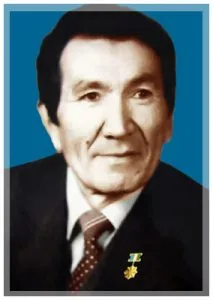
Tolepbergen Kayipbergenov
Tolepbergen Kayipbergenov successfully graduated from the Faculty of Russian Language and Literature of the Karakalpak State Pedagogical Institute in 1955. At first, the future writer worked as a literary employee, editor-in-chief, deputy head of Karakalpak Radio, editor-in-chief of newspapers of the Republic of Karakalpakstan, deputy head of the press committee of the Republic of Karakalpakstan, and the magazine “Amu Darya” was active. From 1980 until the end of his life he worked as chairman of the Writers' Union of Karakalpakstan. The author's books are published in Karakalpak, Uzbek, Russian and other languages. The works of T. Kayipbergenov were highly appreciated and he was awarded the honorary title of People's Writer of Uzbekistan and Karakalpakstan. Winner of the Berdak Prize of the Republic of Karakalpakstan, international awards of Mahmud Kashgari and M. Sholokhov.
In 2003, the writer Tolepbergen Kayipbergenov was awarded the title of Hero of Uzbekistan - the highest award of our country.
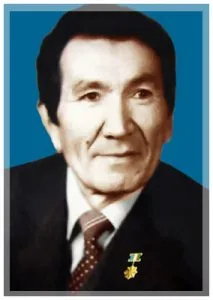
Ibraim Yusupov
In 1949, Ibraim Yusupov graduated from the department of Karakalpak language and literature of the historical and philological faculty of the Karakalpak State Pedagogical Institute. 1949-1962 teacher of Karakalpak literature, 1961-1962 editor-in-chief of the magazine "Amu Darya", 1962-1965 executive secretary, 1965-1980 chairman of the Writers' Union of Karakalpakia, 1980-1988 In 1994, editor-in-chief of the Erkin Karakalpakstan newspaper, in 1994 - head of the Karakalpak department of the Peacekeeping Committee, and in 1994-2000 - head of the Center for Spirituality and Enlightenment of the Republic of Karakalpakstan. Ibraim Yusupov is the people’s poet of the Republic of Uzbekistan and Karakalpakstan. Many of the poet’s poems, stories and poems have been published in Uzbek, Kazakh, Turkmen, Russian and other languages.
Ibraim Yusupov, the honored son of our people, was awarded the title of Hero of Uzbekistan in 2004.
Gairatdin Khojaniyazov
Gairatdin Khojaniyazov graduated from the Karakalpak State Pedagogical Institute in 1972 and began working in the archaeological sector of the Karakalpak branch of the Academy of Sciences of the Republic of Uzbekistan at the Institute of History, Language and Literature named after N. Daugarayev. In 1974-1977, he increased his experience at the M. Lomonosov State University in Moscow and at the Institute of Archeology of the Russian Academy of Sciences. In 1996 he defended his Ph.D. thesis. Since 2000, he has been the head of the archeology department of the Institute of History, Archeology and Ethnography of the Karakalpak branch of the Academy of Sciences of the Republic of Uzbekistan. Gairatdin Khojaniyazov is the author of more than two hundred scientific and journalistic works, as well as several scientific monographs.
In 2001, the scientist was awarded a commemorative sign of the 10th anniversary of Independence of the Republic of Uzbekistan, and in 2003 he was awarded the Order of Labor Glory.
In 2008, archaeologist-scientist Gairatdin Khozhaniyazov was awarded the title of Hero of Uzbekistan.
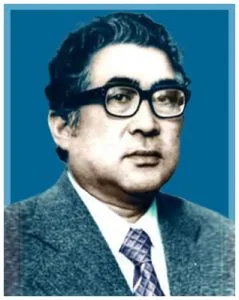
Marat Nurmukhammedov
In 1950 he graduated from the Karakalpak State Pedagogical Institute. He defended his candidate's thesis in 1953 and his doctor's thesis in 1956, professor. Honored Scientist of Uzbekistan and Karakalpakstan. Laureate of the State Prize of the Republic of Uzbekistan named after Beruniy and the State Prize named after Berdak of the Republic of Karakalpakstan. In 1974, he was elected academician of the Academy of Sciences of the Republic of Uzbekistan.
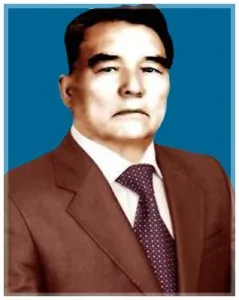
Sabir Kamalov
In 1948 he graduated from the Karakalpak State Pedagogical Institute. In 1953 he defended his candidate's dissertation, and in 1969 his doctoral dissertation as a professor. Honored Scientist of Uzbekistan and Karakalpakstan. Laureate of the State Prize named after Berdak of the Republic of Karakalpakstan. In 1979, he was elected academician of the Academy of Sciences of the Republic of Uzbekistan.
The historian-scientist was awarded the Order of “Respect for the Country” of the Republic of Uzbekistan.
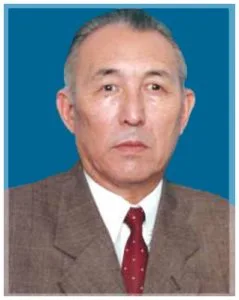
Abatbay Dauletov
In 1964 he graduated from the Karakalpak State Pedagogical Institute. In 1972 he defended his candidate's dissertation, and in 1994 his doctoral dissertation as a professor. Honored Scientist of Karakalpakstan. In 1995, he was elected academician of the Academy of Sciences of the Republic of Uzbekistan.
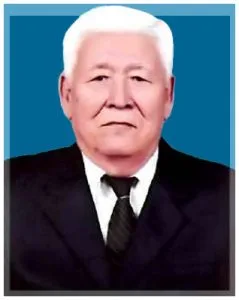
Jumanazar Bazarbayev
In 1955 he graduated from the Karakalpak State Pedagogical Institute. In 1964 he defended his candidate's dissertation, and in 1973 his doctoral dissertation as a professor. Honored Scientist of Uzbekistan and Karakalpakstan, Honorary Worker of Higher and Secondary Specialized Education of Uzbekistan, laureate of the State Prize of the Republic of Karakalpakstan “Berdak”. In 2000, he was elected academician of the Academy of Sciences of the Republic of Uzbekistan.
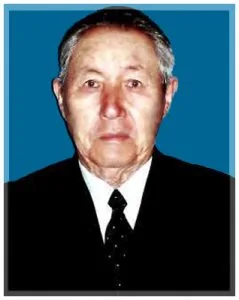
Amin Bakhiev
In 1961 he graduated from the Karakalpak State Pedagogical Institute. In 1969 he defended his candidate's dissertation, and in 1981 his doctoral dissertation as a professor. Honored Scientist of Karakalpakstan, laureate of the State Prize of the Republic of Karakalpakstan named after Berdak. The scientist was awarded the Order of “Respect for the Country” of the Republic of Uzbekistan. In 2000, he was elected academician of the Academy of Sciences of the Republic of Uzbekistan.
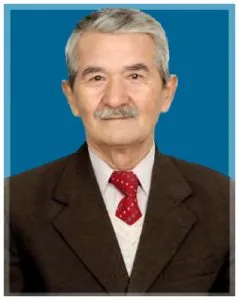
Khusnidin Gamidov
In 1955 he graduated from the Karakalpak State Pedagogical Institute. In 1967 he defended his candidate's dissertation, and in 1990 - his doctoral dissertation. In 1998 he was awarded the Medal of Glory. In 2000, he was elected academician of the Academy of Sciences of the Republic of Uzbekistan.
Faculties
With the reorganization of the Nukus State Pedagogical Institute named after Ajiniyaz, the Faculty of Pedagogy was established in 1990. The faculty was headed by Professor J. Narimbetov. In 1992–1994, Professor O. Alevov, in 1994–1998, Professor O. Dospanov, in 1998–2000, Associate Professor T. Khalmuratov, and in 2000–2005, Associate Professor Sh. Saparov served as the dean. Since September 2005, the faculties of "Methodology of Primary Education" and "Preschool Education" have been merged, renamed "Pedagogics," and the faculty has been assigned the title of Candidate of Philological Sciences. It was headed by P. Najimov. Since October 2008, the faculty's name has been changed to the Faculty of Preschool Education, and the faculty has been under the jurisdiction of the Candidate of Pedagogical Sciences. K. Seitmuratov served as the dean. In April 2010, by decision of the institute's scientific council and based on the rector's order, the faculty's name was changed to "Pedagogical" and the degree of Candidate of Pedagogical Sciences was awarded. K. Jaksimuratov was confirmed as the dean of the faculty. In 2013-2016, the faculty was headed by Associate Professor Z. Klicheva, and in 2016-2017, by Senior Lecturer M. Allayarov. From 2017 to 2025, Ph.D. and Associate Professor Sh. Saparov served as the dean; from September 2025, the faculties of pedagogy and physical culture were merged and transformed into the Faculty of Pedagogy-Psychology and Creative Education, with Ph.D. Professor U. Seitjanova serving as the dean of the faculty.
Departments within the faculty:
General pedagogy
General psychology
Music education
Fine Arts & Engineering Graphics
Physical culture and sports
Fields of study:
60110100-"Pedagogical Sciences"
60111300 - "Musical Education"
60310300-"Psychology"
60110500 - "Fine Arts and Engineering Graphics"
60111200-"Physical Culture"
The total number of professors and teachers is more than 120. Currently, 1316 students are studying at the faculty in the 2025-2026 academic year. The language of instruction is Karakalpak, Uzbek, Kazakh, and Russian.
With the reopening of the Nukus State Pedagogical Institute named after Ajiniyaz, the Faculty of Preschool Education was established in 1990. The faculty was headed by Professor J. Narimbetov, in 1992 by Professor U. Aleuov, and in 1994 by Professor O. Dospanov. In 2005, the Faculty of Preschool Education and the Faculty of Primary Education were merged and renamed the Faculty of Pedagogy, headed by P. Nazhimov, Candidate of Philological Sciences. Since October 2008, it has been transformed into the Faculty of Preschool Education, headed by Candidate of Pedagogical Sciences K. Seitmuratov. In April 2010, by decision of the institute's academic council, it was renamed the Faculty of Pedagogy by order of the Rector, and this faculty was headed by K. Zhaksimuratov, Candidate of Geological Sciences.
The Department of Preschool Education continued its activities within the Faculty of Pedagogy, and subsequently within the Faculty of Primary Education from 2013 to 2019.
In 2019, the Faculty of Preschool Education was reopened, and from the 2025-2026 academic year, it was transformed into the Faculty of Preschool and Primary Education, and today the faculty is headed by Doctor of Pedagogical Sciences (DSc), Associate Professor M.Kh. Allambergenova. Deputy Deans for Academic Affairs of the Faculty K. Tleumuratov and I. Taspolatov, as well as Deputy Deans for Youth Affairs D. Bektursinov and K. Sultanov, are performing their respective duties.
To date, the Faculty of Preschool and Primary Education has a total of 57 professors and teachers, including 4 professors, 13 candidates of sciences, 10 associate professors, 12 senior teachers, 18 assistant teachers, and 10 trainee teachers.
Departments within the Faculty of Preschool Education:
1. Preschool education;
2. Preschool education and defectology;
3. Primary education;
Fields of study within the Faculty of Preschool Education:
1. 60110200-Preschool education;
2. 60110300-Special Pedagogy: Speech Therapy;
3. 60110301-Special Pedagogy: Deaf Pedagogy;
4. 60110302 - Special Pedagogy: Oligophrenopedagogy;
5. 6010400-Primary Education;
From 2019 to the present, Prof. It is headed by G.Kh. Zhumasheva. The professors and teachers of the department are conducting their own research work on the scientific topic of the department on the topic "Pedagogical and Psychological Foundations of Preparing Preschool Children for School." 60110200 - Preschool Education prepares teachers in the field of preschool education for pedagogical technical schools and educators for preschool educational organizations.
Scientific-methodological and educational-methodological seminars are organized at the department, where members of the department demonstrate their activities and work in cooperation with talented students. One of such talented students, M. Sobirova, was awarded the scholarship of the President of the Republic of Uzbekistan in 2008 and currently works as a teacher at the Department of Pedagogy of our institute.
Nukus State Pedagogical Institute named after Ajiniyaz, 2020
Based on Order No. 427 D/1 dated August 14, the Department of "Preschool Education and Defectology" was established as a department for training specialists in special pedagogy.
Specialists trained in the field of special pedagogical education work as defectologists, speech therapists, deaf educators, and oligophrenopedagogues in specialized schools, special preschool educational organizations, general education schools, preschool educational organizations, institutions under the Ministry of Health, and non-governmental organizations.
The Department of "Preschool Education and Defectology" is headed by Candidate of Pedagogical Sciences, Associate Professor Bekmanova Jamila Abdullaevna.
The Department of "Primary Education" is headed by Doctor of Pedagogical Sciences, Doctor of Pedagogical Sciences, Professor Kurbaniyazova Zamira Kalbaevna.
The Department of Primary Education provides instruction in the undergraduate program 60110400 - "Primary Education" in the Karakalpak, Uzbek, Russian, Kazakh, and Turkmen languages. Additionally, work is being carried out to train scientific and pedagogical personnel for the primary education system in Karakalpak and Uzbek languages for the specialties 70110401 - Theory and Methodology of Education and Upbringing and 70110501 - Theory and Methodology of Education and Upbringing (Primary Education).
Also, 24 professors and teachers of the department, along with conducting educational work among students and undergraduates, are working to strengthen the educational and methodological base. Of these, 3 are professors, 4 are associate professors, and 2 are PhDs. (PhD), 2 senior lecturers, 9 assistant lecturers, 4 trainee lecturers, and the academic degree is 37.5%.
Based on the "Master-Apprentice" tradition established at our faculty, for the 2023-2024 academic year, N. Jumamuratova will receive the Ajiniyaz scholarship, S. Yusupova the Ajiniyaz scholarship, R. Shabatova the Navoi scholarship, and G. Seitbaeva the Navoi scholarship; For the 2024-2025 academic year, M. Mubarakova - Presidential State Scholarship, A. Reimbaeva - Navoi State Scholarship, R. Eshmuratova - Navoi State Scholarship, G. Klishbaeva - Ajiniyaz Scholarship, A. Kudyarova - Navoi State Scholarship, G. Imomova - Islam Karimov State Scholarship, G. Yuldashova - Ibrayim Yusupov State Scholarship, U. Umirbaeva - Tulepbergen Kayipbergenov State Scholarship, Sh. Aitbaeva - Ajiniyaz Scholarship; For the 2025-2026 academic year, M. Jumabaeva was awarded the Islam Karimov State Scholarship, A. Abilova the Navoi State Scholarship, and Sh. Kaliknazarova the Ibrayim Yusupov State Scholarship.
Currently, 2,093 students are studying at the faculty, including 16 boys and 2,077 girls.
The faculty was organized in 1937 as part of the Pedagogical Institute. The faculty has a rich history and traditions. In 1963 it was renamed as the “Faculty of Foreign Languages”. Well-known scientists in the Republic, academicians M. Nurmukhamedov, U. Khamidov, People’s Writer of Uzbekistan and Karakalpakstan, Hero of Uzbekistan T. Kayipbergenov, Hero of Uzbekistan A. Uteniyazov and other statesmen graduated from this faculty. The Faculty of Russian Language and Literature continued its work in 1990 at the newly opened Pedagogical Institute. Since 2000, the faculty continued its activities as the Faculty of Russian-English Philology, since 2004 as the Faculty of Foreign Languages. From 1990 to 2017, the faculty was headed by prof. K. Koshchanov, Assoc. B.Khoshanov, Ph.D. B. Shaniyazov, Ph.D. M. Abdullaev, Assoc. G. Kurbaniyazov, Ph.D. A. Tazhiyeva, Ph.D. D. Mamyrbaeva. Since June 2017, the faculty has been headed by Candidate of Philological Sciences, Associate Professor Ilya Dilmanov. M. Allaniyazova, Nurlybay Mambetaminov and S. Saparov work as deputy deans.
Currently, 88 teachers work at the departments of Russian Language and Literature, English Language and Literature, Foreign Languages, including 1 professor, 11 candidates of science and associate professor, 3 doctors of philosophy (PhD). Overall 1301 students have been teaching at the faculty. The faculty prepares bachelors in the following educational areas: English language and literature, Russian language and literature, Russian language and literature (in non. Russian groups). Also, from the 2018-2019 academic year, the Master’s program began training students in the specialty Russian Language and Literature. Currently, for the period of admission of the 2021-2022 academic year, 77 undergraduates study at the Master’s Department in the specialty Foreign Language and Literature (English Language), and 20 undergraduates in the specialty Russian Language and Literature.
List of departments within the faculty:
Directions of education:
- 60111800- Foreign language and literature (English language and literature)
- 60111500- Russian language and literature (Russian language and literature)
- 60111600- Russian language and literature (Russian language and literature in non-Russian groups)
The Ellikqala Faculty of Nukus State Pedagogical Institute was established on July 24, 2019, in accordance with Order No. 669 of the Ministry of Higher and Secondary Special Education, on the basis of the “Boston” academic lyceum in the Ellikqala district of the Republic of Karakalpakstan. The establishment of the faculty in the Ellikqala district created great opportunities for students from the southern districts of the Republic of Karakalpakstan, as well as from various regions (Khorezm, Surkhandarya, Kashkadarya).
Material and Technical Base and Facilities
The faculty's academic building has a capacity of 720 students, and there is also a student dormitory with 300 places, consisting of 2 buildings. In addition, the following facilities and infrastructure have been created in the academic building for students and teachers:
- A sports hall and a gymnastics hall;
- A modern dining hall for 300 people;
- An assembly hall for 300 people and lecture halls for 100 people;
- A computer room and a state-of-the-art computer classroom designed for foreign language teaching;
- A library with a collection of 1,700 books and its cozy reading room for 50 people.
Composition of the library collection:
|
Type of literature |
Quantity (copies) |
|
Textbooks/study guides |
900 |
|
Socio-political literature |
615 |
|
Fiction |
120 |
|
Textbooks |
65 |
Educational Process and Spiritual-Educational Life
With the start of the 2019-2020 academic year, about 600 students who expressed a desire to study at the institute's Ellikqala Faculty are pursuing education in various specialties. They are taught by the institute's highly qualified faculty members.
Within the framework of the President's 5 important initiatives, sports, science, and computer literacy clubs have been regularly organized during extracurricular time. The faculty's “Creativ” team of comedians and quick-wits, as well as the creative and theatrical youth groups that actively participate in festive events dedicated to the Day of the State Language, the Day of Teachers and Mentors, and the Day of State Symbols, continue to expand their activities.
In order to promote a healthy lifestyle among students, competitions in volleyball, football, table tennis, athletics, wrestling, and chess are regularly held.
Organizational Structure: Departments and Fields of Education
Departments within the faculty:
- Department of Social and Humanitarian Sciences
- Department of General Education Subjects and Distance Education
Current fields of education:
- Methodology of teaching mathematics
- Physical culture
- Uzbek language and literature
- English language and literature
- Primary education and sports-educational work
- Preschool education
- Fine arts and engineering graphics
In recent years, the faculty was led by Associate Professors K. Turdanov, M. Jalelov, K. Elgondiev, J. Seypullayev, and A. Kamalov. Since 2020, it has been headed by Associate Professor R. Jiemuratov. In 2022 and 2023, the Faculty Dean, R. Jiemuratov, participated in scientific and pedagogical internships at Kazan Federal University and in Finland, respectively, to enhance his professional qualifications.
Today, the faculty provides education to over 1,000 students, with more than 300 graduates earning their bachelor's degrees each year. Under the leadership of Dean R. Jiemuratov, significant achievements have been made across academic, scientific, spiritual, and educational spheres. Currently, the faculty comprises the Departments of Mathematics, and Digital Technologies, Informatics, and Robotics, with a total of over 60 professors and lecturers dedicated to educating the youth.
Degree Programs Offered at the Faculty:
- Mathematics and Informatics
- Applied Mathematics
- Mathematics
Department of Mathematics
The Faculty of Physics and Mathematics at the Karakalpak Teachers' Institute was established during the 1935–1936 academic year, which included the opening of the Department of Physics and Mathematics. It was initially headed by M.V. Sheglov, a scientist invited from Russian educational institutions.
In the 1948–1949 academic year, the Department of Physics and Mathematics was split into two separate departments: Mathematics and Physics. Throughout the 1950s and 1960s, Candidates of Physics and Mathematics F.V. Tomashevsky and B.V. Levin, along with Candidate of Pedagogical Sciences A.Z. Nasirov, worked in the Department of Mathematics. In addition to conducting educational work, they contributed significantly to training the first generation of science candidates.
In 1969, the Department of Mathematics was divided into the Department of Mathematical Analysis and the Department of General Mathematics. The Department of General Mathematics was headed by M. Galekeev, and staffed by 14 instructors, including Candidates of Physics and Mathematics O. Saparniyazov and I. Makhsudov, as well as Candidate of Pedagogical Sciences T. Tavbaev.
On September 1, 1990, the Nukus State Pedagogical Institute was reopened. The Department of Mathematics and Informatics was established within its Faculty of Engineering and Pedagogy. By 1996, the faculty housed the Departments of Higher Mathematics, Methods of Teaching Mathematics, and Informatics and Computing Technology.
In 2015, the Department of General Mathematics was renamed the Department of Methods of Teaching Mathematics. Candidate of Physics and Mathematics G. Kaypnazarova led the department from 2015 to 2016.
Since 2016, the department has been headed by Professor B. Prenov. In 2017, there were 28 professors and lecturers working in the department, with the academic degree rate standing at 28.5%. Currently, the department has a total of nearly 50 faculty members, 35 of whom are full-time employees, pushing the department's academic degree rate above 50%.
Department of Digital Technologies, Informatics, and Robotics
Following the reopening of the Nukus State Pedagogical Institute on September 1, 1990, the Department of Higher Mathematics and Informatics was established within its Faculty of Engineering and Pedagogy. The department was headed by Candidate of Technical Sciences, Associate Professor B. Akhmetov, and its staff included 11 teachers, 3 engineers, 1 operator, 1 senior laboratory assistant, and 1 laboratory assistant.
On December 13, 1996, the Department of Informatics and Computing Technology was established on the basis of the Faculty of Mathematics and Informatics. It was later renamed the Department of Informatics and Information Technologies in 2001, and the Department of Methods of Teaching Informatics in 2010. From 2010 to 2016, the Department of Methods of Teaching Informatics was led by Candidate of Physics and Mathematics A. Tureniyazova. During this period, the department's faculty accomplished several milestones. On March 1, 2012, M.X. Allambergenova successfully defended her candidate dissertation on "Creating Interactive Educational Complexes in Informatics and Their Use in the Educational Process." She also won the national stage of the "Best Educator-Researcher" competition in 2016 in the category of Pedagogical Education. M.X. Allambergenova has published over 100 scientific works, including 1 monograph, 2 textbooks, 6 study guides, 18 instructional materials, 2 methodological recommendations, 102 scientific articles and abstracts, as well as 3 patents.
From 2017 to 2023, the Department of Methods of Teaching Informatics was headed by Candidate of Physics and Mathematics M. Alaminov. Several department teachers successfully defended their research work and received their academic degrees: P. Kalkhanov (2018), J. Otepbergenov (2020), Z. Ilyasova (2021), J. Pirekeev (2022), and M. Mambetniyazov, O. Zaripov, and B. Tlegenov (2023).
The department currently consists of 20 staff positions and has been led by Doctor of Philosophy in Pedagogical Sciences (PhD), Associate Professor J. Otepbergenov since November 2023.
Between 1996 and 2026, the department's faculty published more than 10 textbooks, over 40 study guides, 200+ instructional manuals, 300+ scientific articles, and over 400 abstracts in national and international journals.
The dean of the faculty is Doctor of Historical Sciences – M. Sarybaev, Deputy Dean for Youth Affairs D.Reimov, Deputy Dean for Academic Affairs. F.Madreymov, S.Allambergenov, I. Jaksimov, Deputy Dean for Scientific Affairs S.Dosmagambetov, national idea, the basis of spirituality and in legal education, the department is headed by Doctor of Pedagogical Sciences (PhD) E.Tilewov, Methods of Teaching History, Doctor of Historical Sciences (DSc) R.Bazarbayev, the Department of Social Subjects is headed by Doctor of Historical Sciences Y.Abdullaeva, Methods of Teaching Geography, doc. G.Utepova. In the 2021-2022 academic year, the number of students at the faculty was 749.
Today, the Faculty of History is focused on training teachers with higher education in the field of public education of the republic in the field of history, geography, national ideology, spirituality and law.
The faculty has a wide range of student learning opportunities. All classrooms are equipped with computers and video projectors and are connected to the local Internet. In addition, free Wi-Fi equipment was installed for free use by teachers and students. At the faculty, students use computer and language classes. Professors and teachers who have effectively used such opportunities teach students using modern and advanced pedagogical educational technologies.
Students constantly reinforce the theoretical knowledge gained in practice. In particular, 1st and 2nd year students undergo field, archaeological, ethnographic and industrial internships, and 3-4 year students undergo teaching practice in secondary schools.
As a result of the opportunities created for the students at the Faculty, the winners of the Named State Scholarship were identified among the students of the Faculty.
In particular: A. Abdullaeva, a student of history teaching methodology, a student of the faculty of “National Idea”, “Fundamentals of Spirituality and Legal Education” D. Turkpenbaeva, and a student of the Department of Geography M. Bazarbayev became the winners of the Navoi State Scholarship. Scholarship holder Dzhumabaev became a laureate of the State Scholarship named after Islam Karimov.
Also, students of our faculty are active participants in various Olympiads and sports competitions held annually throughout the country.
At the final stage of the “Tafakkur Sinovlari” competition, held in Tashkent in December 2019, the Republic of Uzbekistan took first place among all higher educational institutions of the republic.
In addition, the intellectual club “Shezhire”, consisting of the intelligent youth of the faculty, and the KVN team “Wa-ha-ha”, consisting of cheerful young people, take prizes in the annual competitions held throughout the country.
The first foundation of the faculty was laid in September 1943 at the teaching institute as part of the Physics and Mathematics Department. On the basis of the Department of Natural Geography, which was later transformed into a faculty in 1948. Senior lecturer A. Buleshov, a chemist, became the first dean of this faculty. In 1959, Pak Yakov, PhD, was appointed Dean of the Faculty. In the following years, from 1960 to 1965, Prof. S.Yerezhepov worked at the faculty as dean, in 1967-1968 A.Tleubergenov, in 1969-1986 Associate professor K. Aitbaev.
After the independence of our country, in order to improve the training of school teachers in the republic in the 1990-1991 academic year, with the restoration of the Nukus State Pedagogical Institute, the faculty was reorganized under the name "Natural Sciences" on September 5, 1996, and Prof. B.Allamuratov worked as dean in 1996-1998, associate professor in 1998-2002.Saparov, 2003-2010. assoc. Sh. Allamuratov, 2010-2021. assoc. A.Saparov, since March 2021, led by Assoc. K.Reimov.
Our faculty has established bachelor's degree programs 60111300 – Technological education, 60510100 – Biology, 60530100 – Chemistry, 60530200 – Geography, 60530500 – Physics, Master's degree programs 70530510 – Methods of teaching exact and natural sciences (physics and astronomy), 70530203 – Methods of teaching exact and natural sciences (geography), 70111301 – Theory and methods of teaching and upbringing (Technological education), 70530104 – Methods of teaching exact and natural sciences (chemistry), 70510105 – Methods of teaching exact and natural sciences (biology), and in cooperation with the L.N. Gumilyov Eurasian National University of the Republic of Kazakhstan, joint 1+1 master's degree programs have been established based on the specialties 7M01512 - Chemistry and 7M01513 - Biology of the Azhiniyaz NGPI 70530101 - Chemistry, 70510101 - Biology.
Our graduates are fully employed in educational and educational institutions of the republic on the basis of mutual agreements.
The number of students increases from year to year, depending on the demand of the state. Currently, the faculty has 1,199 undergraduate students. They have at their disposal a library with a collection of more than 145 thousand copies of about 15 thousand titles, electronic libraries and classrooms, classrooms and laboratories equipped with modern technical equipment and the Internet, which will serve as a basis for deepening students' knowledge.
Students are taught by experienced and highly qualified professors and teachers. At the same time, among the excellent and gifted students over the past 3 years: 2 students have won the A.Navoi State Scholarship, 2 students have won the I. Karimov State Scholarship, 1 student has won the Zahiriddin Muhammad Babur Scholarship, 3 students have won the Azhiniyaz Scholarship, 1 student has won the I.Yusupov Scholarship..
Currently, the faculty has departments of "Chemistry," "Biology," "Geography," "Physics," "Technological Education," which employ 11 doctors of Sciences, professors, 13 candidates of Sciences, associate professors, 40 PhD, associate professors, 35 senior teachers and assistants who teach undergraduate and graduate students., they lead the research work.
Currently, the Department of Chemistry is headed by a Doctor of Philosophy in Pedagogical Sciences, PhD, senior lecturer M.B.Artikov, the Department of Biology is headed by a Doctor of Philosophy in Biological Sciences, PhD, Associate Professor A.S.Berdibaev, the Department of Geography is headed by a Doctor of Philosophy in Economics, PhD, Associate Professor U.K.Eshimbetov, the Department of Physics - PhD in Physical and Mathematical Sciences, PhD S.K.Abdizhaliev, the Department of "Technological Education" is headed by Doctor of Pedagogical Sciences, DSc, Associate Professor N.T.Orinbetov.
The departments of the faculty have concluded cooperation agreements with scientific laboratories of the Karakalpak Scientific Research Institute of Natural Sciences and the Botanical Garden of the Academy of Sciences of the Republic of Uzbekistan, the Committee on Ecology, Environmental Protection and Climate Change of the Republic of Karakalpakstan, the state institution International Innovation Center of the Aral Sea Region, which provides great assistance to students in conducting laboratory classes, conducting qualification practice.
Fields of study
| Basics of geography and economic knowledge 60111000 | Bachelor |
| Biology 60510100 | Bachelor |
| Biology (by science) 70510101 | Master's |
| Chemistry 60110800 | Bachelor |
| Field of study: Museum studies (by types) 60212100 | Bachelor Master's |
| Fine arts and decorative arts 70111201 | Master's |
| Fine arts and engineering graphics 60110500 | Bachelor |
| Foreign language and literature (English) 60110900 | Bachelor Master's |
| History 60220300 | Bachelor |
| Information technologies in education 70110105 | Master's |
| Karakalpak language and literature 60111500 | Bachelor |
| Management of educational establishments 70110103 | Master's |
| Mathematics and informatics 60110600 | Bachelor |
| Methodology of Teaching Social Sciences and Humanities (Fundamentals of Spirituality) 70112101 | Master's |
| Methods of teaching exact and natural sciences (mathematics) 70110601 | Master's |
| Methods of teaching exact and natural sciences (physics and astronomy) 70110701 | Master's |
| Methods of teaching social and humanitarian sciences (history) 70111101 | Master's |
| Mother tongue and literature (by language) 60111500 | Bachelor Master's |
| Music education 60110600 | Bachelor |
| Music education and the arts 70111301 | Master's |
| National idea, the fundamentals of spirituality and law education 60111100 | Bachelor |
| Native Language and Literature: Kyrgyz Language and Literature 60110700 | Bachelor Master's |
| Pedagogy 60110100 | Bachelor |
| Pedagogy and psychology 70110102 | Bachelor |
| Pedagogy and psychology of preschool education 60110300 | Bachelor |
| Physical culture 60112200 | Bachelor |
| Physical education and sports in preschool and primary education 60111900 | Bachelor |
| Physics 60530500 | Bachelor |
| Preschool Education 60110200 | Bachelor |
| Primary education 60110400 | Bachelor |
| Psychology 60310300 | Bachelor |
| Special pedagogy 60110300 | Bachelor |
| Technological education 60111300 | Bachelor |
| The theory and history of pedagogy (by the type of activity) 70110101 | Master's |
| The theory and method of education (pre-school education) 70110201 | Master's |
| Theory and method of education (primary education) 70110501 | Master's |
| Theory and methods of physical education and sports training 70112201 | Master's |
| Uzbek language and literature 70111401 | Bachelor Master's |
| Uzbek language in foreign language groups 70111601 | Bachelor |
Programmes
All programmes →
Nukus state pedagogical institute named after Ajiniyaz
Native Language and Literature: Kyrgyz Language and Literature
25 279 688 so'm
per year
Nukus state pedagogical institute named after Ajiniyaz
Methods of teaching exact and natural sciences (mathematics)
25 279 688 so'm
per year
Nukus state pedagogical institute named after Ajiniyaz
Theory and methods of physical education and sports training
25 279 688 so'm
per year
Nukus state pedagogical institute named after Ajiniyaz
Native Language and Literature: Kyrgyz Language and Literature
25 279 688 so'm
per year
Nukus state pedagogical institute named after Ajiniyaz
Theory and method of education (primary education)
25 279 688 so'm
per year
Nukus state pedagogical institute named after Ajiniyaz
Music education and the arts
25 279 688 so'm
per year
Nukus state pedagogical institute named after Ajiniyaz
Information technologies in education
25 279 688 so'm
per year
Nukus state pedagogical institute named after Ajiniyaz
Methods of teaching exact and natural sciences (mathematics)
25 279 688 so'm
per year
Nukus state pedagogical institute named after Ajiniyaz
Methods of teaching social and humanitarian sciences (history)
25 279 688 so'm
per year
Nukus state pedagogical institute named after Ajiniyaz
Fine arts and decorative arts
25 279 688 so'm
per year
Nukus state pedagogical institute named after Ajiniyaz
Foreign language and literature (English)
20 000 000 so'm
per year
Nukus state pedagogical institute named after Ajiniyaz
Mother tongue and literature (by language)
25 279 688 so'm
per year
Notable alumni
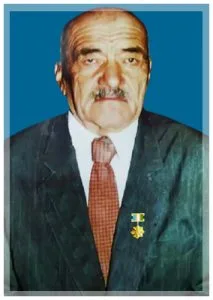
Allaniyaz Uteniyazov
Tulepbergen Qayipbergenov
Ibroyim Yusupov
Vera Borisovna Pak
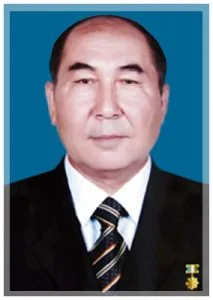
Gayratdin Xujaniyazov
Sabir Kamalov
Marat Nurmuhammedov
Amin Baxiev
Jumanazar Bazarbaev
Husniddin Hamidov
Abatbay Dauletov
Rustem Janabaev
Alisher Auezbaev